
Olive Garden Allergen Menu

Dining out with a food allergy or intolerance means doing a little homework first — and Olive Garden makes that easier than many chains by publishing a detailed allergen menu. This guide walks through how Olive Garden’s allergen information works, what the gluten-sensitive menu covers, how to navigate dairy, nuts, soy, eggs, shellfish, and sesame, and exactly how to order to lower your risk.
One thing has to come first, because it’s the most important sentence in this entire guide: Olive Garden is not an allergen-free facility, and it cannot guarantee that any item is free of any allergen. Their kitchens use shared cooking and prep areas, ingredients and suppliers change, and cross-contact is always possible. This article is a planning aid — it is not a substitute for checking Olive Garden’s current official allergen guide and telling your server about your allergy every single visit.
With that understood, let’s get into it.
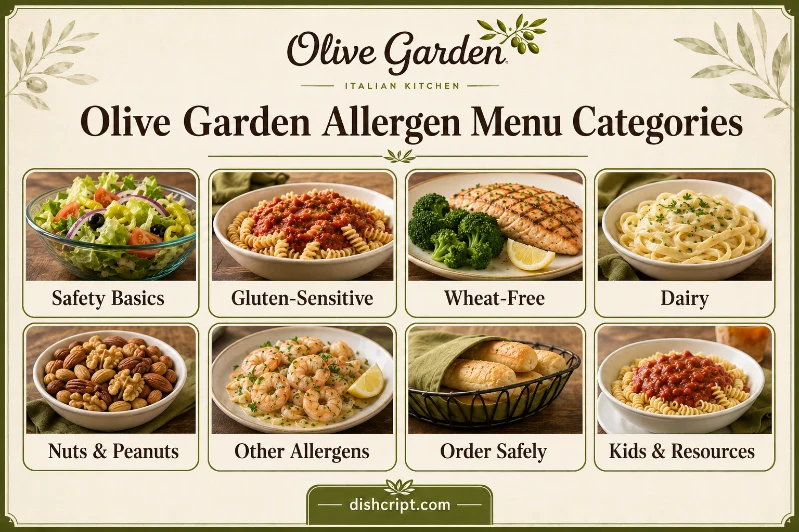
What the Olive Garden Allergen Menu Is
Olive Garden provides an official Allergen Guide (a downloadable/printable chart) plus dedicated food-allergy and gluten-sensitive pages on their website. Together these tell you which of the most common allergens are present in each menu item, based on information from their suppliers.
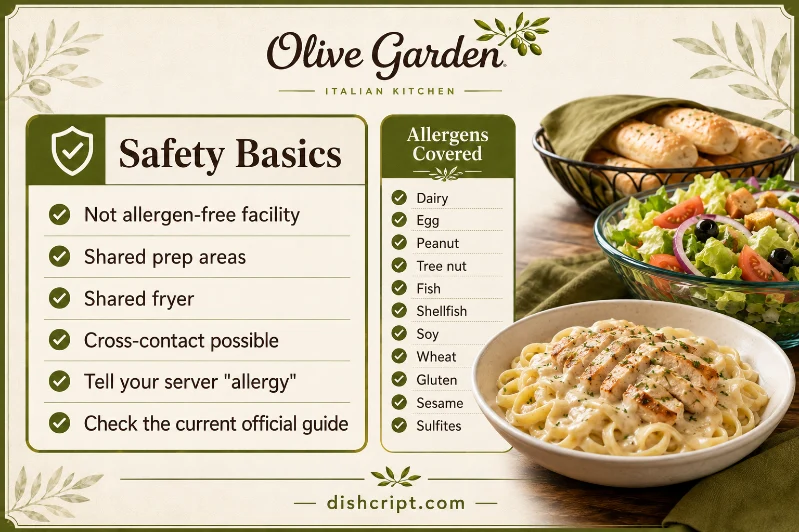
The Allergen Guide tracks the FDA “Big 9” allergens plus a few more. The allergens it covers:
- Dairy (milk)
- Egg
- Peanut
- Tree nut
- Fish (finfish)
- Shellfish — both crustacean (shrimp, crab, lobster) and mollusk (oysters, clams, mussels, scallops)
- Soy
- Wheat and gluten (tracked separately)
- Sesame
- Sulfites
Crucially, the guide tells you which allergens are present in an item — it does not certify anything as free of an allergen, and it notes that items cooked in the shared fryer or on the grill may come into contact with all allergens.
⚠️ Read this before anything else — the safety basics
- Olive Garden is not an allergen-free facility and cannot guarantee any item is free of any allergen.
- Kitchens use shared prep areas, utensils, grills, and a shared fryer — cross-contact is possible on virtually any dish.
- There is no separate fryer. Fried foods can contact wheat/gluten, shellfish, dairy, soy, and egg.
- Always tell your server you have a food allergy before ordering — and use the word “allergy,” not “preference,” to trigger the kitchen’s allergen protocol.
- Allergen information changes as suppliers change. Check Olive Garden’s current official allergen guide each time you dine, and confirm with a manager.
- If your reaction risk is severe (e.g., anaphylaxis or celiac disease), weigh that risk carefully — see the relevant sections below.
Gluten & the “Gluten-Sensitive” Menu
This is by far the most-searched part of Olive Garden’s allergen information, and it comes with an important distinction.
“Gluten-Sensitive” Does Not Mean “Gluten-Free”
Olive Garden deliberately labels its menu “gluten sensitive,” not “gluten free.” Their official position: these are items made without gluten-containing ingredients, but they have not chemically analyzed them to confirm they meet the FDA’s gluten-free standard of under 20 parts per million. So while the recipes avoid gluten ingredients, the items aren’t certified gluten-free, and cross-contact in a shared kitchen remains a real risk.
The Gluten-Free Pasta
Olive Garden’s gluten-sensitive pasta is a gluten-free rotini made with brown rice flour. Per Olive Garden, it’s cooked and held separately from regular pasta, then added directly to the sauté pan when ordered to avoid contact with other pasta or pasta water — a meaningful step, though not a guarantee against all cross-contact.
Commonly Cited Gluten-Sensitive Options
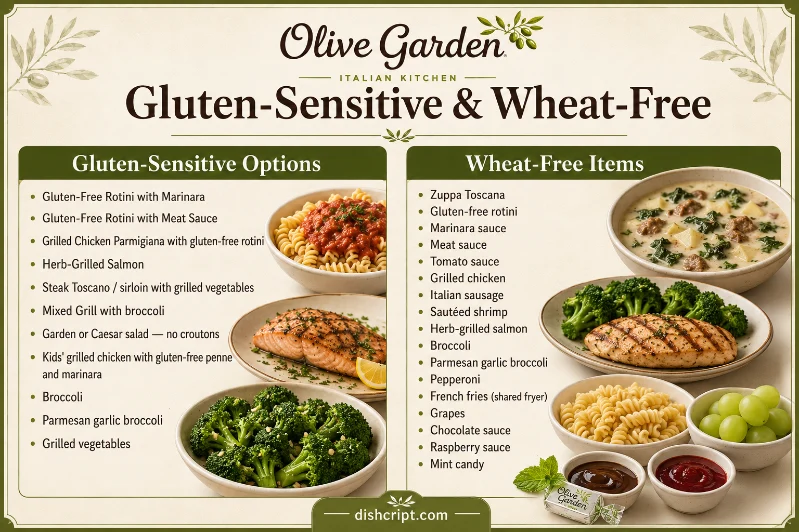
From Olive Garden’s gluten-sensitive menu and allergen guide, options frequently include:
- Gluten-Free Rotini with Marinara or Meat Sauce
- Grilled Chicken Parmigiana served with gluten-free rotini
- Herb-Grilled Salmon
- Steak Toscano / sirloin with grilled vegetables
- Mixed Grill (chicken and/or steak) with broccoli
- Garden or Caesar salad — no croutons (ask for sealed dressing)
- Kids’ grilled chicken with gluten-free penne and marinara
- Sides like broccoli, parmesan garlic broccoli, and grilled vegetables
Always order these from the current gluten-sensitive menu and confirm with your server. Availability and recipes can vary by location, and this list is a starting point — not a guarantee.
A Note for Celiac Diners
Because Olive Garden can’t certify gluten-free status and cross-contact is possible in shared spaces, many celiac and highly gluten-sensitive guests choose to be extra cautious — sticking strictly to the gluten-sensitive menu (the rotini with marinara or meat sauce is a common “safest bet”), asking for sealed salad dressing, requesting a manager, and skipping anything from the shared fryer. Some diners report excellent, careful service; others have reported reactions. Only you can judge your own risk tolerance.
“Wheat-Free” Items (Different From Gluten-Free)
The allergen guide separately flags items made without wheat — but remember, wheat-free does not mean gluten-free, since gluten can come from other sources. Items the guide has listed as wheat-free include Zuppa Toscana, gluten-free rotini, marinara/meat/tomato sauces, grilled chicken, Italian sausage, sautéed shrimp, herb-grilled salmon, broccoli, parmesan garlic broccoli, pepperoni, French fries (shared fryer), grapes, chocolate sauce, raspberry sauce, and mint candy. Verify against the current official guide, since supplier-driven changes happen.
Dairy (Milk) Allergies
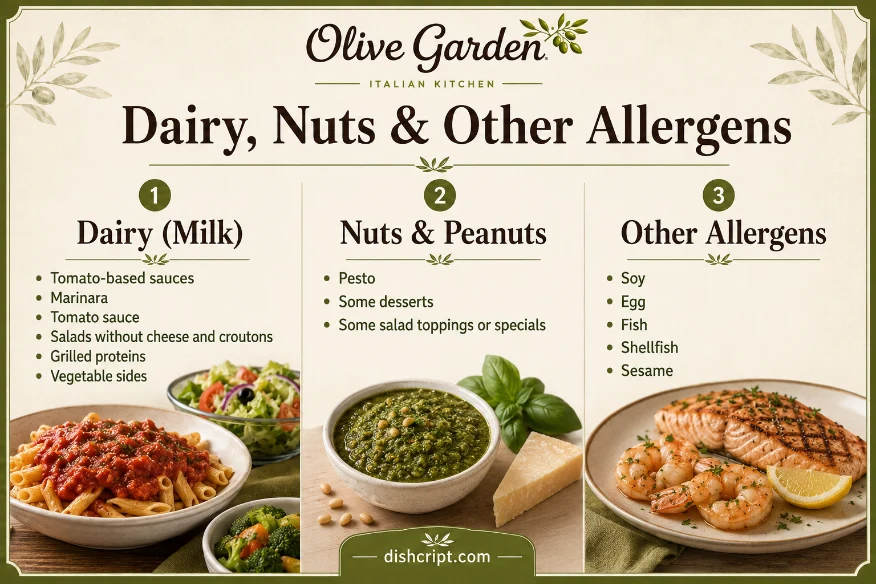
Italian-American food leans heavily on cheese, cream, and butter, so dairy takes real planning at Olive Garden. Cream sauces (like Alfredo), cheese-filled pastas, and many desserts contain dairy.
Generally more dairy-flexible routes — all subject to verification — tend to involve building a plate around tomato-based sauces (marinara, tomato sauce) over pasta, salads without cheese and croutons, grilled proteins, and simple vegetable sides. Do not assume any item is dairy-free — check the official allergen guide’s dairy column for each item and confirm with your server, since butter, cheese, and cream show up in places you might not expect (and there are conflicting reports online about specific items like the breadsticks).
Tree Nuts & Peanuts
Olive Garden tracks both tree nut and peanut allergens in its guide. Many core pasta-and-sauce dishes don’t list nuts as an ingredient, but pesto, certain desserts, and some salad toppings or specials can contain nuts, and cross-contact is always possible. If you have a nut allergy, check the guide item-by-item and tell your server — and be aware the shared kitchen means no item can be guaranteed nut-free.
Soy, Egg, Fish & Shellfish, Sesame
- Soy: Soy is tracked in the guide. Note Olive Garden uses highly refined canola or soybean oil in its fryers; per its suppliers and the FDA, highly refined soybean oil does not contain soy protein and is not considered a major allergen — but discuss this with a manager if you have a soy allergy.
- Egg: Tracked in the guide; present in some pastas, dressings, and desserts. Verify per item.
- Fish & shellfish: Tracked separately as finfish, crustacean shellfish (shrimp, crab, lobster), and mollusk shellfish (oysters, clams, mussels, scallops). Seafood dishes obviously contain these, but the shared fryer and grill mean cross-contact is possible even on non-seafood orders.
- Sesame: Now part of the tracked “Big 9”; check the guide and confirm, especially on breads and dressings.
The shared-fryer rule matters for everyone: because there’s no dedicated fryer, anything fried (including French fries) can contact wheat/gluten, shellfish, dairy, soy, and egg. If you have any of those allergies, treat fried items with caution.
How to Order Safely at Olive Garden
A practical, step-by-step approach that aligns with Olive Garden’s own allergen protocol:
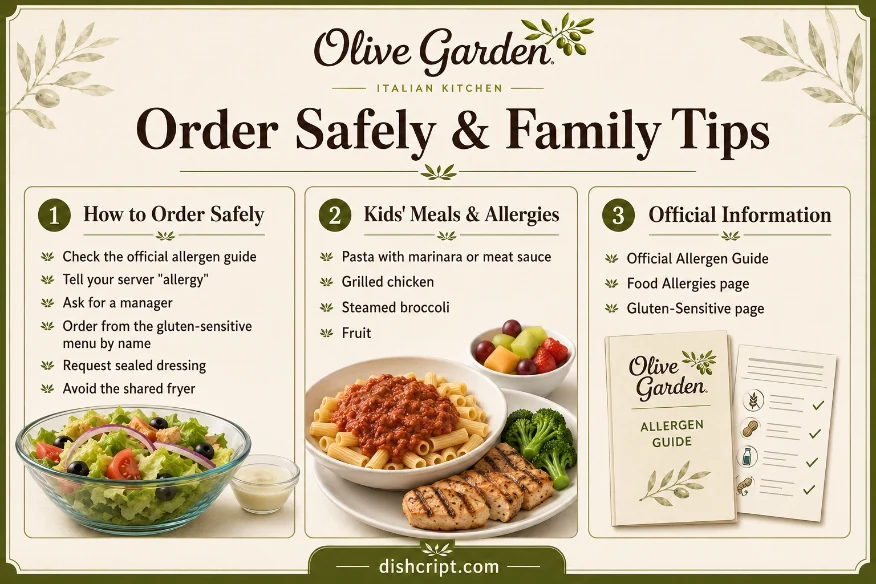
- Check the official allergen guide before you go. Review it for your specific allergen(s) and note a few candidate dishes. Re-check each visit, since it updates.
- Tell your server immediately — say “allergy.” When you state you have a food allergy, they add it to your order, which alerts the kitchen and triggers protocols like changing gloves and utensils.
- Ask for a manager if you’re unsure. Managers complete a food-safety course and, at most locations, will come to your table to confirm your order and oversee prep.
- Order from the gluten-sensitive menu by name if avoiding gluten — many locations have it on the tabletop kiosk.
- Request sealed dressing and skip croutons on salads, since croutons can cross-contaminate shared dressing.
- Avoid the shared fryer if you react to any of the fryer-contact allergens.
- Don’t improvise substitutions unless every ingredient is verified — stick to known options.
Kids’ Meals & Allergies
For families, Olive Garden’s allergen guide also helps with the kids’ menu. Commonly workable kid options (always verify) include pasta with marinara or meat sauce, grilled chicken, and sides like steamed broccoli or fruit, with simple adjustments like removing cheese or switching sauces. Tell the server about your child’s allergy the same way — using the word “allergy” — and confirm preparation with a manager.
Where to Get Official Olive Garden Allergen Information
Because allergen details are safety-critical and change over time, always go to the source:
- Official Allergen Guide: the printable/downloadable chart on Olive Garden’s website (under Nutrition → Food Allergies), listing allergens per item for U.S. restaurants (excludes Hawaii).
- Food Allergies & Gluten-Sensitive pages: Olive Garden’s official explanations of their protocols, fryer practices, and “gluten sensitive” labeling.
- In-restaurant: ask staff for the printed guide and request a manager.
- Guest Relations: for specific ingredient questions, contact Olive Garden’s Guest Relations (historically 1-800-331-2729, Monday–Friday, 10am–4pm Eastern) or via the contact form on olivegarden.com. Note they may take several days and typically limit ingredient inquiries to a few items per request.
Is there an Olive Garden allergen menu PDF? Yes — Olive Garden publishes an official allergen guide (PDF/printable) for U.S. locations on its website. Because it’s updated as suppliers and recipes change, always use the most current version rather than a saved older copy.
Olive Garden Allergen Menu FAQ
Does Olive Garden have a gluten-free menu?
Olive Garden has a “gluten-sensitive” menu — items made without gluten-containing ingredients — but it does not label them “gluten-free,” because they haven’t been chemically verified to the FDA’s under-20ppm standard, and cross-contact is possible. The gluten-free rotini is made from brown rice flour and cooked/held separately.
Is Olive Garden safe for celiac disease?
Olive Garden takes precautions (separate pasta handling, allergy alerts, manager involvement, glove/utensil changes), but it’s not an allergen-free facility and can’t guarantee gluten-free. Celiac and highly sensitive guests should weigh the cross-contact risk, stick strictly to the gluten-sensitive menu, and talk to a manager. Experiences vary.
Are Olive Garden breadsticks gluten-free or dairy-free?
The breadsticks contain wheat, so they are not gluten-free, and there’s no gluten-free breadstick widely available. For dairy and other allergens, check the current official allergen guide rather than relying on general claims, as reports conflict.
What allergens does Olive Garden’s guide cover?
Dairy, egg, peanut, tree nut, fish, crustacean and mollusk shellfish, soy, wheat, gluten, sesame, and sulfites.
Does Olive Garden have a separate fryer for allergies?
No. There’s a single shared fryer, so fried items can contact wheat/gluten, shellfish, dairy, soy, and egg.
How do I tell Olive Garden about a food allergy?
Tell your server before ordering and use the word “allergy.” It gets added to your order, alerts the kitchen, and triggers safety steps. Ask for a manager if you have questions.
Does Olive Garden have dairy-free or vegan options?
There are options that can be built around tomato-based sauces, salads without cheese/croutons, and grilled vegetables, but none are guaranteed allergen-free — verify each item against the official guide and confirm with staff.
Final Thoughts
Olive Garden does more than many chains to support guests with food allergies and intolerances: a detailed allergen guide, a gluten-sensitive menu with separately handled brown-rice pasta, manager involvement, and a kitchen allergy protocol triggered the moment you say the word “allergy.” That’s genuinely helpful — but it works only when you use it.
So treat this guide as your pre-visit prep, then do the two things that matter most every single time: check Olive Garden’s current official allergen guide for your specific allergen, and tell your server (and a manager) about your allergy before you order. Olive Garden can’t guarantee any item is allergen-free, and the safest meal is the one you’ve confirmed yourself.


