Caramelized Onion and Brie Crostini: Sweet, Melty, and Gone in Minutes

Caramelized Onion and Brie Crostini: Sweet, Melty, and Gone in Minutes
The first time I made caramelized onion and brie crostini, I was not planning a fancy appetizer at all. It was Thanksgiving afternoon, the turkey was resting, and I realised I had nothing out on the table for people to nibble while they waited. The kitchen was already a mess, I was already tired, and the last thing I wanted was another complicated dish. What I did have was a baguette going a little stale, half a wheel of brie left from a cheese board, and two yellow onions sitting in the pantry.
I sliced the onions thin, cooked them low and slow in a little butter until they turned sweet and golden, and spread them over toasted baguette slices with melted brie. That was it. No recipe, no measuring, no stress. Then my brother took one, went quiet for a second, and asked if there were more. By the time the turkey was carved, the whole plate was empty, and someone had asked me for the recipe for what was basically onions on toast.
Now this is the appetizer I make when I want something that tastes like I spent all afternoon on it, but really did not. The onions do all the work. Cooked slowly, they turn from sharp and crunchy into something sweet, soft, and almost jammy, and that sweetness against salty, melty brie is exactly the kind of bite people remember. It looks elegant on a platter, it is easy to eat standing up, and it disappears faster than almost anything else I put out.
Why This Recipe Works
- The onions do the flavour work. Slow cooking turns plain yellow onions sweet and golden, so you do not need a long list of fancy ingredients to make this taste special.
- It is mostly hands-off. The onions need time, not attention. You stir them now and then while you do other things, then the crostini come together in minutes.
- Sweet and salty in one bite. Jammy onions, creamy brie, and crisp toasted bread give you three textures and a perfect sweet-salty balance.
- It feeds a crowd without fuss. One baguette and two onions make plenty, and doubling it is as simple as slicing another baguette and adding another onion to the pan.
- It looks like a party appetizer. A platter of golden crostini with melted brie and a few fresh thyme leaves looks beautiful, even though the whole thing is just toast, onions, and cheese.
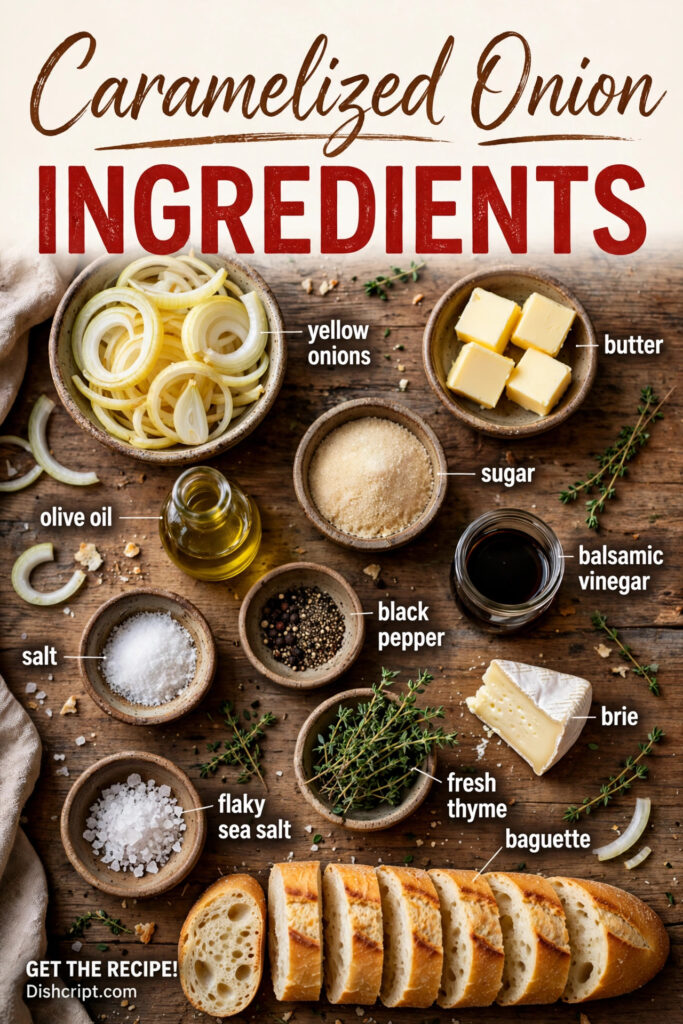
Ingredients
For the caramelized onions:
- 2 large yellow onions, thinly sliced
- 2 tablespoons butter
- 1 tablespoon olive oil
- 1 teaspoon sugar, optional but helpful
- 1 tablespoon balsamic vinegar
- 1/2 teaspoon salt
- 1/4 teaspoon black pepper
- 1 teaspoon fresh thyme leaves, plus a little more for garnish
For the crostini:
- 1 baguette, sliced into 1/2-inch slices (about 24 slices)
- 2 tablespoons olive oil, for brushing
- 8 ounces brie, rind on, cut into thin slices
- Fresh thyme leaves, for garnish
- Flaky sea salt, for finishing
Equipment You’ll Need
- A large skillet, for the onions
- A sharp knife and a cutting board
- A baking sheet, lined with parchment paper
- A pastry brush, or a spoon, for the olive oil
- A wooden spoon, for stirring the onions
- A serving platter
How to Make It
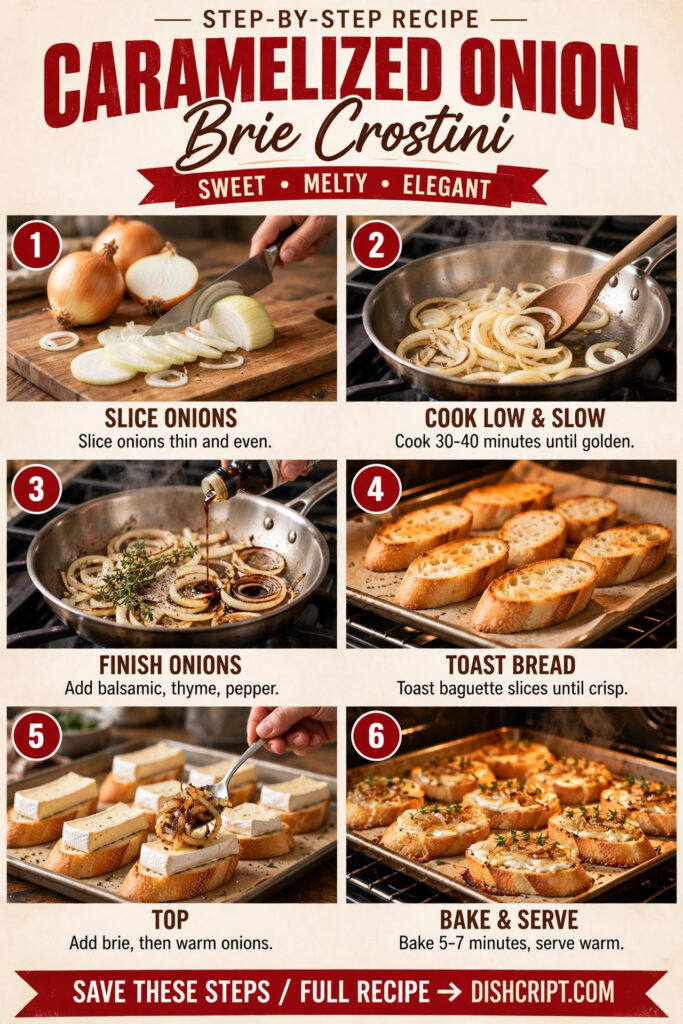
Step 1: Slice the onions thin. Cut the onions in half from top to root, peel them, and slice them as thin as you can. Thin slices cook down evenly and turn sweet faster than thick chunks. Do not worry about making them perfect. They are going to cook down into a soft, golden pile, and a few uneven pieces will not matter at all.
Step 2: Cook the onions low and slow. Melt the butter with the olive oil in a large skillet over medium-low heat. Add the onions and a pinch of salt, and stir so they are coated in the butter and oil. Cook them for 30 to 40 minutes, stirring every few minutes. They will go from white to pale gold to a deep, rich golden brown. If they start to stick, add a splash of water and scrape up the browned bits. That is where the flavour lives. Do not rush this step by turning the heat up. High heat burns onions. Low heat sweetens them.
Step 3: Finish the onions. When the onions are deep golden, soft, and sweet, stir in the sugar if you are using it, the balsamic vinegar, the black pepper, and the thyme leaves. Cook for 2 more minutes, until the vinegar has mostly cooked off and the onions look jammy and glossy. Taste them. They should be sweet, a little tangy, and deeply savoury. Set the pan aside. You can make the onions up to 3 days ahead and keep them in the fridge, which makes this an easy Thanksgiving appetizer.
Step 4: Toast the baguette. Heat the oven to 400°F. Lay the baguette slices on the lined baking sheet and brush each one lightly with olive oil. Bake for 8 to 10 minutes, flipping once halfway through, until the slices are golden and crisp at the edges but still a little soft in the middle. You want them sturdy enough to hold the toppings, not so hard that they crack when someone bites them. Let them cool for a couple of minutes.
Step 5: Top with brie and onions. Turn the oven down to 375°F. Put a slice of brie on each toasted baguette slice, then spoon a generous amount of caramelized onions on top. The brie does not need to be perfect. It will melt and spread in the oven, and a slightly uneven slice still looks beautiful once it is warm and soft. Leave the rind on. It holds the brie together and tastes completely fine once melted.
Step 6: Bake until melty and serve warm. Bake the crostini for 5 to 7 minutes, until the brie is soft and starting to melt and the onions are warmed through. Do not overbake them or the bread will dry out. Take them out, sprinkle over a little flaky sea salt and a few fresh thyme leaves, and put them on a serving platter. Serve them warm, while the brie is still soft. They are still good at room temperature, but warm is when they are at their best.
My Best Tips
Keep the heat low for the onions. This is the one rule that matters most. Medium-low heat, patience, and a stir every few minutes will give you sweet, golden onions. High heat will give you burnt, bitter ones, and there is no fixing burnt onions. If you are in doubt, turn the heat down a little more.
Slice the onions thin and even. Thin slices cook at the same speed, so you do not end up with some pieces burnt and some still raw. You do not need a mandoline. A sharp knife and a steady hand are enough. Aim for slices about as thin as a coin.
Use yellow onions, not red or sweet ones. Yellow onions have the best balance for caramelizing. They turn sweet without going mushy, and they hold a little texture even after 40 minutes. Sweet onions work too, but they can go very soft. Red onions are lovely, but they turn a murky colour that does not look as pretty on a golden crostini.
Make the onions ahead. The onions taste even better the next day, after the flavours have settled. Make them up to 3 days ahead, keep them in an airtight container in the fridge, and warm them gently in a skillet before you build the crostini. On Thanksgiving day, that turns this into a 15-minute appetizer.
Do not skip the balsamic at the end. A spoonful of balsamic vinegar at the end wakes the whole pan up. It adds a gentle tang that keeps the sweet onions from tasting flat, and it gives them that glossy, jammy look. If you do not have balsamic, a teaspoon of apple cider vinegar works too.
Toast the bread just enough. You want crisp edges and a centre that still has a little give, so the crostini does not shatter when someone bites it. If your baguette is very fresh, toast it a minute longer. If it is a day old, which is actually ideal for crostini, toast it a minute less.
Serve them warm, on a warm platter if you can. Cold brie is firm and quiet. Warm brie is soft, creamy, and everything this appetizer should be. If you are making a big batch, bake them in two rounds and put the second round in the oven just as the first one runs out. People will notice the difference.
Variations
- Fig and brie crostini. Swap the caramelized onions for a spoonful of fig jam, or add a thin smear of fig jam under the brie before the onions go on. The fig makes it sweeter and a little more festive, and it pairs beautifully with the thyme.
- Apple and onion crostini. Add a few very thin slices of apple to the pan in the last 10 minutes of cooking the onions. The apple softens, sweetens, and adds a fresh note that cuts through the richness of the brie.
- Mushroom and onion crostini. Cook sliced mushrooms with the onions for the last 15 minutes. The mushrooms add an earthy, savoury depth, and the crostini feel a little heartier, which is nice if this is one of only a few appetizers.
- Herbed goat cheese crostini. Swap the brie for soft goat cheese mixed with chopped fresh herbs. The flavour is tangier and lighter, and it is a good option if some of your guests do not eat brie.
- Spicy onion crostini. Add a pinch of red pepper flakes to the onions in the last few minutes of cooking. The gentle heat is a surprise against the sweet onions and creamy brie, and it works especially well if the rest of your spread is mild.
Make Ahead
This is a wonderful make-ahead appetizer, which is exactly why I love it on Thanksgiving. You can make the caramelized onions up to 3 days ahead. Cool them completely, store them in an airtight container in the fridge, and warm them gently in a skillet before serving. You can also slice the baguette a day ahead and keep the slices in an airtight bag at room temperature. On the day, all you have to do is toast the bread, top it with brie and warm onions, and bake for 5 to 7 minutes. From fridge to platter, that is about 15 minutes, which is a gift on a busy holiday afternoon.
Storing and Reheating
Leftover caramelized onions keep in the fridge for up to 5 days in an airtight container, and they are wonderful on sandwiches, burgers, and roast chicken, so do not throw them away. Assembled crostini are best eaten the day they are made. If you do have leftovers, keep them in the fridge for up to 2 days and reheat them in a 350°F oven for 5 minutes, until the brie softens again. They will not be quite as crisp as fresh ones, but they are still very good. I do not recommend freezing assembled crostini, because the bread goes soggy when it thaws.
What to Serve With It
- A simple green salad. A handful of greens with a light lemon vinaigrette balances the richness of the brie and gives guests something fresh between bites.
- Roasted nuts. A bowl of warm, salted almonds or pecans next to the crostini makes the whole spread feel like a proper appetizer table.
- Cranberry sauce or chutney. A small bowl of cranberry sauce on the side adds a tart, festive note that pairs beautifully with the sweet onions.
- Other small bites. These crostini sit happily next to the cranberry pecan goat cheese log, sausage-stuffed mini peppers, or any other Thanksgiving appetizer. They are small, so guests can try a bit of everything.
- Something crisp to drink. Sparkling water with lemon, apple cider, or a light white wine all keep the table feeling fresh before a heavy Thanksgiving meal.
FAQs
How long do the onions really take? About 30 to 40 minutes over medium-low heat. I know that sounds long, but most of it is hands-off. Stir every few minutes, add a splash of water if they stick, and let time do the work. Rushing them on high heat will burn them, and burnt onions taste bitter, not sweet.
Can I use a different cheese? Yes. Brie is my favourite because it melts into something soft and creamy, but camembert works the same way. Goat cheese is tangier and lighter. Even a mild mozzarella will melt nicely, though you will lose some of the rich flavour brie brings.
Can I make these gluten-free? Yes. Use gluten-free baguette slices, or spoon the onions and brie over roasted sweet potato rounds instead of bread. The sweet potato version is lovely, and it is naturally gluten-free.
My onions are sticking to the pan. What am I doing wrong? Probably nothing. Onions stick as they caramelize, and those browned bits are full of flavour. Add a splash of water, scrape the pan with your wooden spoon, and keep going. If they are sticking a lot, your heat may be a touch too high, so turn it down a little.
Can I double this recipe? Easily. Use 4 onions and 2 baguettes, and cook the onions in a very large skillet or in two batches so they have room to cook down evenly. If the pan is too crowded, the onions will steam instead of caramelizing, and they will take much longer to turn golden.
Do I need to remove the brie rind? No. Leave it on. It holds the slice together in the oven and softens as it bakes. Once the brie is warm and melty, most people do not even notice the rind, and removing it just makes a mess.
A Final Word
Caramelized onion and brie crostini are proof that a great appetizer does not need a long ingredient list or a complicated method. It needs patience with the onions, good bread, and cheese that melts properly, and that is really it. The onions turn sweet on their own, the brie turns creamy in the oven, and together on crisp toast they taste like something you planned for days. Make the onions ahead, keep them in the fridge, and on Thanksgiving day you are 15 minutes from a platter that will disappear before the turkey is even carved. Make a few extra, because someone will always ask if there are more. And if you make them, I would love to hear how they went.