Butternut Squash Crostini: Sweet, Savory, and Gone in Minutes

Butternut Squash Crostini: Sweet, Savory, and Gone in Minutes
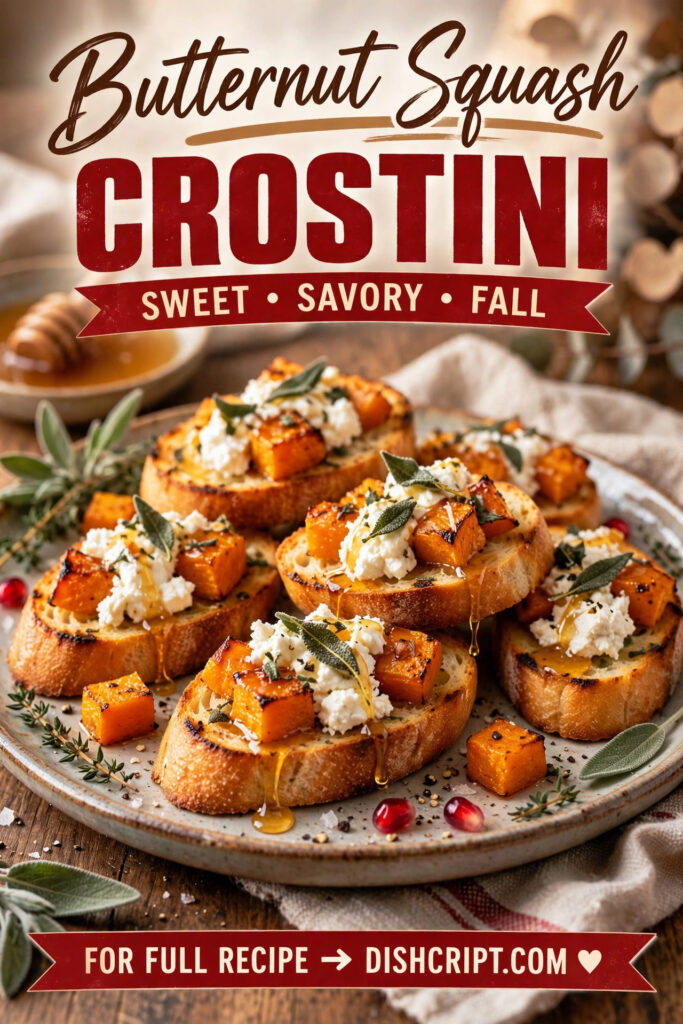
The first time I made butternut squash crostini, I was trying to use up half a squash left over from soup. It was sitting in the fridge, already peeled and cubed, and I did not want it to go to waste. I had a baguette, some goat cheese, and a handful of sage leaves from the garden. I roasted the squash until it was soft and sweet, mashed it lightly with a fork, and spread it over toasted bread with goat cheese and crispy sage.
It was one of those happy accidents that turns into a regular recipe. My family ate the whole plate before dinner, standing in the kitchen, and asked why I had never made it before. I had no good answer. I just had not thought of it until that squash needed using up.
Now butternut squash crostini are the appetizer I make when I want something that tastes like fall, looks beautiful on a platter, and does not ask much of me. I make them for Thanksgiving, for a harvest dinner, and for any autumn evening when friends drop by. The squash roasts while I do other things, the crostini come together in minutes, and the combination of sweet squash, tangy cheese, and crispy sage is exactly the kind of bite people remember.
Why This Recipe Works
- Roasting makes squash sweet. A hot oven turns butternut squash soft, caramelized, and naturally sweet, so you do not need much else to make it taste special.
- It is mostly hands-off. The squash needs time in the oven, not attention. You toss it once, then build the crostini in minutes.
- Sweet, tangy, and crunchy in one bite. Soft squash, creamy goat cheese, crisp toast, and crispy sage give you a perfect balance of textures and flavours.
- It feeds a crowd without fuss. One squash and one baguette make plenty, and doubling it is as simple as roasting another tray of squash.
- It looks like a fall party appetizer. A platter of golden crostini with sage leaves and a drizzle of honey looks beautiful, even though the whole thing is just toast, squash, and cheese.
Ingredients
For the roasted squash:
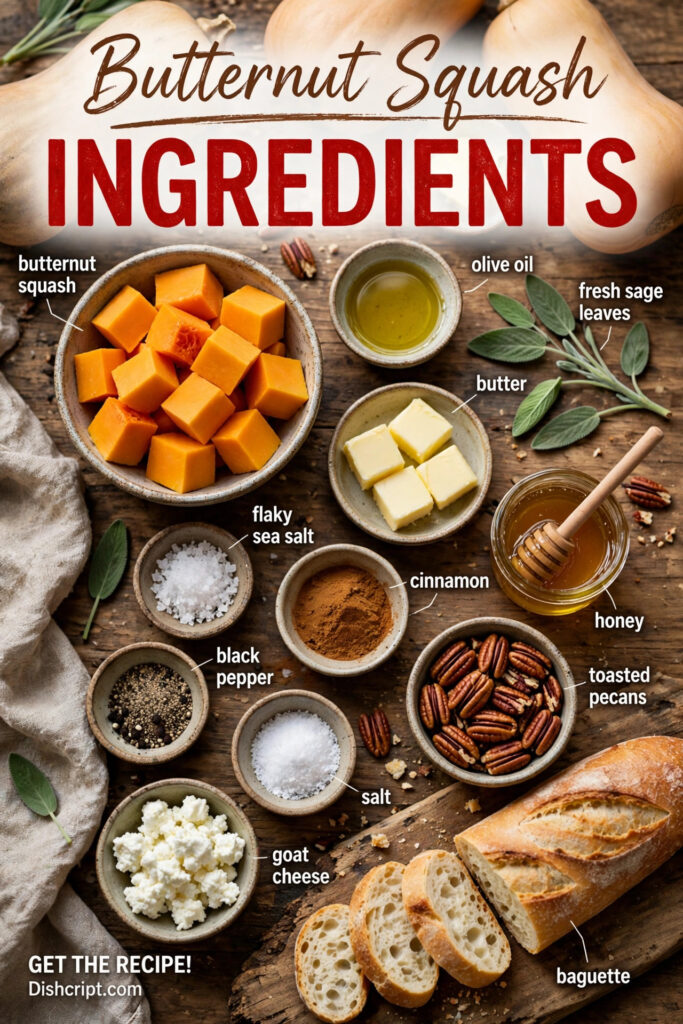
- 1 medium butternut squash, about 2 to 2 1/2 pounds, peeled, seeded, and cut into 1/2-inch cubes
- 2 tablespoons olive oil
- 1 teaspoon salt
- 1/2 teaspoon black pepper
- 1/2 teaspoon ground cinnamon, optional but lovely
- 1 tablespoon honey, for drizzling, optional
For the crostini:
- 1 baguette, sliced into 1/2-inch slices (about 24 slices)
- 2 tablespoons olive oil, for brushing
- 8 ounces goat cheese, softened
- 12 to 16 fresh sage leaves
- 1 tablespoon butter, for crisping the sage
- Flaky sea salt, for finishing
- Extra honey, for drizzling, optional
- Toasted pecans or walnuts, chopped, for sprinkling, optional
Equipment You’ll Need
- A large baking sheet, lined with parchment paper
- A second baking sheet, for the crostini
- A sharp knife and a cutting board
- A vegetable peeler
- A small skillet, for the sage
- A pastry brush, or a spoon, for the olive oil
- A serving platter
How to Make It
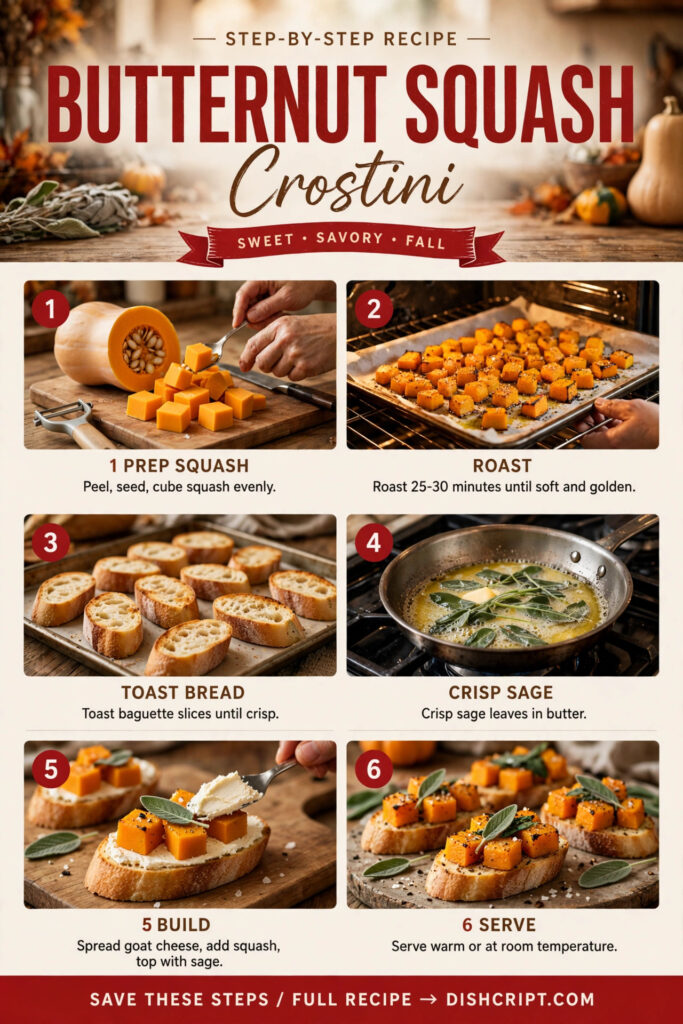
Step 1: Heat the oven and prep the squash. Heat your oven to 425°F. Line a large baking sheet with parchment paper. Peel the butternut squash, cut it in half, scoop out the seeds, and cut the flesh into 1/2-inch cubes. Try to keep the cubes roughly the same size, so they roast evenly. Put the cubes on the baking sheet, drizzle with olive oil, and sprinkle with salt, black pepper, and cinnamon if you are using it. Toss them with your hands until they are evenly coated, then spread them out in a single layer. Crowded squash steams instead of roasting, so give the cubes space.
Step 2: Roast until soft and sweet. Put the baking sheet in the oven and roast for 25 to 30 minutes, tossing once halfway through. The squash is done when it is soft enough to mash lightly with a fork, golden at the edges, and sweet-smelling. Some pieces will caramelize more than others, and that is a good thing. Those darker edges taste wonderful. Take the squash out and let it cool for a few minutes. You can roast the squash up to 3 days ahead and keep it in the fridge, which makes this an easy Thanksgiving appetizer.
Step 3: Toast the baguette. Turn the oven down to 400°F. Lay the baguette slices on a second lined baking sheet and brush each one lightly with olive oil. Bake for 8 to 10 minutes, flipping once halfway through, until the slices are golden and crisp at the edges but still a little soft in the middle. You want them sturdy enough to hold the toppings, not so hard that they crack when someone bites them. Let them cool for a couple of minutes.
Step 4: Crisp the sage. Melt the butter in a small skillet over medium heat. When it foams, add the sage leaves in a single layer. Cook for 30 seconds to 1 minute, flipping once, until the leaves are crisp and dark green. They crisp very fast, so watch them closely. Lift them out with a fork and put them on a paper towel. The butter will smell nutty and wonderful. Save it. A spoonful of that sage butter drizzled over the crostini at the end is a beautiful finishing touch.
Step 5: Build the crostini. Spread a generous layer of softened goat cheese on each toasted baguette slice. Spoon a mound of roasted squash over the cheese, and mash it lightly with the back of the spoon so it stays put. You do not need to make it perfectly smooth. A little texture looks rustic and tastes better. Top each crostini with a crispy sage leaf, a pinch of flaky sea salt, and, if you like, a drizzle of honey and a sprinkle of chopped toasted nuts.
Step 6: Serve warm or at room temperature. Put the crostini on a serving platter and serve them warm, while the squash is still a little warm and the cheese is soft, or at room temperature. They are good both ways, which makes them perfect for a party table where people graze over an hour or two. If you are making them ahead, build them no more than an hour before serving, so the bread stays crisp.
My Best Tips
Cut the squash evenly. Cubes that are all about the same size roast at the same speed. If some are tiny and some are huge, the tiny ones will burn while the huge ones are still hard. Aim for 1/2-inch cubes, and do not worry about making them perfect.
Do not crowd the pan. Roasted squash needs space for hot air to move around it. If the cubes are piled on top of each other, they steam and stay pale and soft. Use two baking sheets if you need to. Space is what gives you those sweet, golden edges.
Roast the squash ahead. The squash tastes just as good, if not better, the next day, after the flavours have settled. Roast it up to 3 days ahead, keep it in the fridge, and warm it gently before building the crostini. On Thanksgiving day, that turns this into a 15-minute appetizer.
Soften the goat cheese first. Cold goat cheese straight from the fridge is hard to spread and tears the bread. Take it out 30 minutes before you build the crostini, or microwave it for 15 seconds. Soft cheese spreads smoothly and holds the squash in place.
Watch the sage closely. Sage leaves go from crisp to burnt in seconds. Cook them in a single layer, flip them once, and lift them out as soon as they are dark green and crisp. Burnt sage tastes bitter, and there is no fixing it.
Do not skip the flaky salt. A pinch of flaky sea salt on top wakes up the sweet squash and the tangy cheese. It is a small detail, but it makes the whole bite taste more complete.
Serve them within an hour of building. Toasted bread softens as it sits under squash and cheese. Built crostini are at their best in the first hour, while the bread is still crisp. If you need to plan further ahead, keep the components separate and build them just before guests arrive.
Variations
- Maple pecan squash crostini. Drizzle the roasted squash with maple syrup instead of honey, and top with chopped toasted pecans. The flavour is deeper and more autumnal, and it pairs beautifully with the sage.
- Brie squash crostini. Swap the goat cheese for thin slices of brie. The brie melts a little under the warm squash, and the flavour is richer and milder than goat cheese.
- Spicy squash crostini. Add a pinch of red pepper flakes to the squash before roasting, and a drizzle of hot honey on top. The gentle heat is a surprise against the sweet squash, and it works especially well if the rest of your spread is mild.
- Herbed ricotta squash crostini. Swap the goat cheese for ricotta mixed with chopped fresh herbs, lemon zest, and a pinch of salt. The flavour is lighter and fresher, and it is a good option if some of your guests do not eat goat cheese.
- Balsamic squash crostini. Drizzle the finished crostini with a little balsamic glaze instead of honey. The tang cuts through the sweetness of the squash and adds a beautiful dark gloss to the platter.
Make Ahead
This is a wonderful make-ahead appetizer, which is exactly why I love it on Thanksgiving. You can roast the squash up to 3 days ahead. Cool it completely, store it in an airtight container in the fridge, and warm it gently before serving. You can also slice the baguette a day ahead and keep the slices in an airtight bag at room temperature. On the day, all you have to do is toast the bread, crisp the sage, and build the crostini. From fridge to platter, that is about 15 minutes, which is a gift on a busy holiday afternoon.
Storing and Reheating
Leftover roasted squash keeps in the fridge for up to 5 days in an airtight container, and it is wonderful in soup, pasta, and salads, so do not throw it away. Assembled crostini are best eaten the day they are made. If you do have leftovers, keep them in the fridge for up to 2 days and reheat them in a 350°F oven for 5 minutes, until the cheese softens again. They will not be quite as crisp as fresh ones, but they are still very good. I do not recommend freezing assembled crostini, because the bread goes soggy when it thaws.
What to Serve With It
- A simple green salad. A handful of greens with a light lemon vinaigrette balances the richness of the cheese and gives guests something fresh between bites.
- Roasted nuts. A bowl of warm, salted pecans or walnuts next to the crostini makes the whole spread feel like a proper appetizer table.
- Cranberry sauce or chutney. A small bowl of cranberry sauce on the side adds a tart, festive note that pairs beautifully with the sweet squash.
- Other small bites. These crostini sit happily next to the caramelized onion and brie crostini, cranberry pecan goat cheese log, or any other Thanksgiving appetizer. They are small, so guests can try a bit of everything.
- Something crisp to drink. Sparkling water with lemon, apple cider, or a light white wine all keep the table feeling fresh before a heavy Thanksgiving meal.
FAQs
How do I peel a butternut squash without a struggle? Use a sharp vegetable peeler, and cut the squash in half first if it is large. A sturdy peeler and a firm grip make the job much easier. If the skin is very tough, microwave the whole squash for 2 to 3 minutes first to soften it slightly, then peel it while it is still warm, being careful with the hot surface.
Can I use frozen butternut squash? Yes. Thaw it completely, pat it very dry with paper towels, and roast it as usual, adding a few extra minutes if needed. Frozen squash releases more water, so spreading it out well and patting it dry are important for getting those golden edges.
Can I make these gluten-free? Yes. Use gluten-free baguette slices, or spoon the squash and goat cheese over roasted sweet potato rounds instead of bread. The sweet potato version is lovely, and it is naturally gluten-free.
My squash is not caramelizing. What am I doing wrong? Probably the pan is too crowded, or the oven is not hot enough. Spread the cubes out in a single layer, make sure the oven is fully heated to 425°F, and do not toss them too often. A little patience and a lot of space are what give you golden edges.
Can I double this recipe? Easily. Use 2 squashes and 2 baguettes, and roast the squash on two baking sheets so it has room to caramelize. If the pan is too crowded, the squash will steam instead of roasting, and it will take much longer to turn golden.
Do I need to remove the sage stems? Yes, for the crispy sage topping. Pick the leaves off the stems before cooking. The stems are woody and do not crisp nicely. Save the stems for stock if you like, or compost them.
A Final Word
Butternut squash crostini are proof that a great appetizer does not need a long ingredient list or a complicated method. It needs squash roasted until sweet, bread toasted until crisp, cheese that spreads properly, and sage crisped just right, and that is really it. The squash turns golden on its own, the cheese turns creamy, and together on crisp toast they taste like something you planned for days. Roast the squash ahead, keep it in the fridge, and on Thanksgiving day you are 15 minutes from a platter that will disappear before the turkey is even carved. Make a few extra, because someone will always ask if there are more. And if you make them, I would love to hear how they went.