Honey Garlic Glazed Salmon: Sweet, Sticky, and So Easy

Honey Garlic Glazed Salmon: Sweet, Sticky, and So Easy
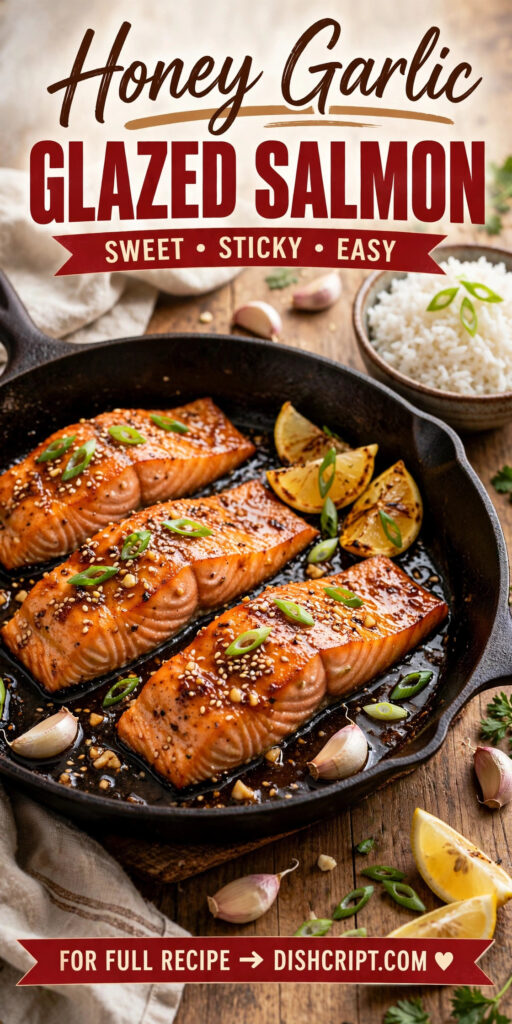
The first time I made honey garlic glazed salmon, it was for a Tuesday night when I wanted dinner to taste like a restaurant without any fuss at all. I had two beautiful salmon fillets in the fridge, a jar of honey on the shelf, and a head of garlic on the counter. I seared the salmon until the skin was crisp and golden, then poured a sticky glaze of honey, garlic, soy sauce, and lemon over the top and let it bubble into a glossy coat. When I put the skillet down on the table, the salmon was flaky and pink inside, the glaze was sweet and shiny, the garlic had turned golden in the honey, and the whole dish smelled like caramel and garlic and lemon. My husband took one bite, looked at me, and said, “This is the best salmon you have ever made.” That is when I knew the name was earned.
That is why honey garlic glazed salmon has become my go-to dinner when I want something sweet and savoury but still easy. It is fancy enough for a special occasion, simple enough for a weeknight, and it comes together in just 20 minutes with one pan and a handful of good ingredients. The salmon sears in minutes and stays moist inside, the honey glaze builds on garlic and soy and lemon, and the sesame seeds and green onions at the end keep the whole dish fresh and colourful instead of heavy. It sits beautifully on a plate with rice and steamed vegetables, it feeds a hungry family with almost no effort, and it is the salmon people ask about long after the plates are cleared.
Now I make it whenever I want dinner to feel like a treat, always with extra glaze spooned over the top, always with a squeeze of lemon at the end. It is the dish I make when I want the table to go quiet for a minute, because everyone is too busy scraping up the sticky sauce. A warm, glossy salmon fillet, a little rice on the side, a quiet kitchen, and suddenly an ordinary Tuesday night feels like a celebration. Even my pickiest eater asks for seconds, which is how I know a salmon recipe has truly earned its place.
Why This Recipe Works
- It is fast, 20 minutes from fridge to plate. No long cooking, no special equipment — just a skillet and a handful of good ingredients.
- The salmon stays moist and flaky. A hot sear locks in the juices, and finishing the salmon in the warm glaze keeps it tender instead of drying it out.
- The glaze is sweet but balanced. Honey, soy sauce, garlic, and lemon make a sticky glaze, and the lemon keeps it bright instead of cloyingly sweet.
- It looks restaurant-quality. Golden salmon, a glossy honey glaze, and a sprinkle of sesame seeds make a plate that looks far fancier than the effort it took.
- It is endlessly flexible. Serve it over rice, with noodles, or with roasted vegetables, swap the salmon for chicken or shrimp, make it mild or add chilli — and it will still be delicious.
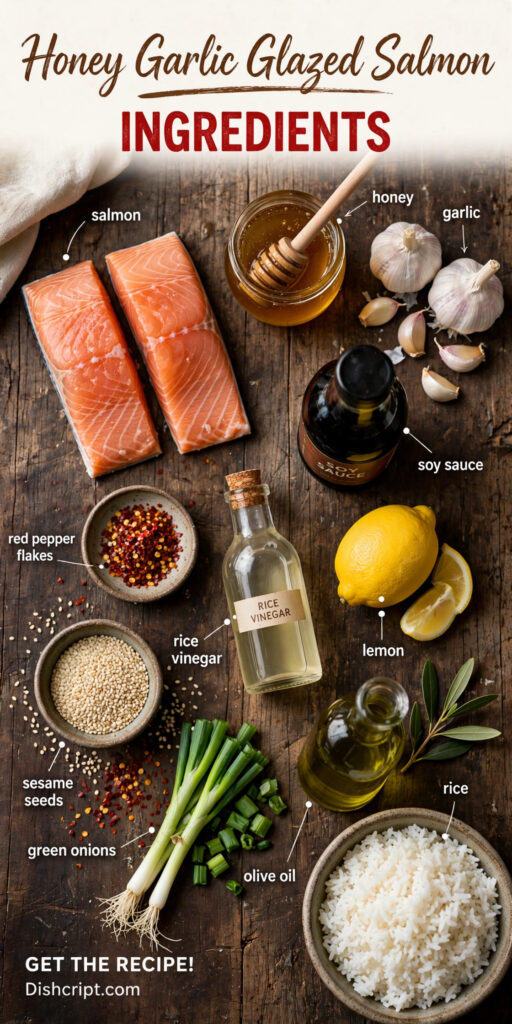
Ingredients
For the salmon:
- 4 salmon fillets, about 6 ounces each, skin on or off
- 1 tablespoon olive oil
- 1/2 teaspoon salt
- 1/2 teaspoon black pepper
For the honey garlic glaze:
- 4 tablespoons honey
- 4 cloves garlic, minced
- 3 tablespoons soy sauce
- 1 tablespoon lemon juice
- 1 teaspoon rice vinegar, optional
- 1/2 teaspoon red pepper flakes, optional
For serving:
- 1 tablespoon sesame seeds
- 2 green onions, thinly sliced
- 1 lemon, cut into wedges
- Cooked rice or steamed vegetables, for serving
Equipment You’ll Need
- A large skillet
- Tongs
- A small bowl, for the glaze
- A wooden spoon
How to Make It
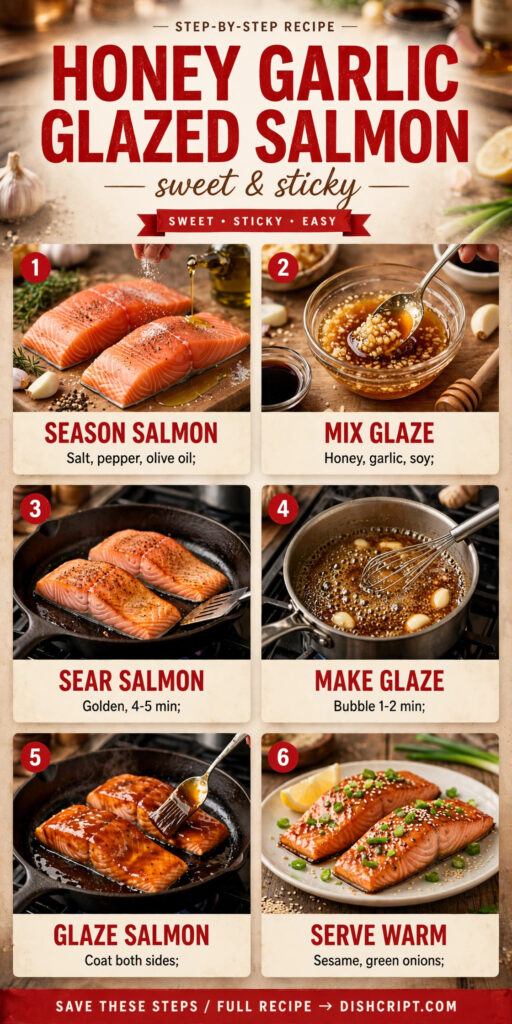
Step 1: Season the salmon. Pat the salmon fillets dry with paper towels, then rub them all over with the olive oil, salt, and black pepper. This step matters, because dry salmon sears instead of steaming, and seasoning first means every bite is flavourful. Set the salmon aside.
Step 2: Mix the glaze. Stir the honey, garlic, soy sauce, lemon juice, rice vinegar, and red pepper flakes if you are using them together in a small bowl. This step matters, because mixing the glaze first means it goes into the pan in one pour, and the garlic gets evenly coated in honey instead of burning on its own. Set the glaze aside.
Step 3: Sear the salmon. Heat a large skillet over medium-high heat and add the salmon skin-side down. Cook for 4 to 5 minutes, until the skin is crisp and golden and the salmon releases easily from the pan. Flip and cook for 2 to 3 minutes more, until the salmon is just cooked through. This step matters, because a hot pan gives the salmon a golden crust, and salmon that cooks too long turns dry. Remove the salmon to a plate and set aside.
Step 4: Make the glaze. Lower the heat to medium and pour the glaze into the same skillet. Let it bubble gently for 1 to 2 minutes, until it thickens slightly and smells like caramel and garlic. This step matters, because a gentle bubble thickens the honey without burning it, and garlic that cooks too long turns bitter.
Step 5: Glaze the salmon. Return the salmon to the pan and spoon the glaze over the top, turning each fillet once so both sides are coated. Warm the salmon through for 1 minute — no longer, or the salmon will overcook and the glaze will burn.
Step 6: Serve warm. Serve the salmon on warm plates, spooning the extra glaze over the top, with sesame seeds, green onions, and lemon wedges on the side. The salmon is wonderful hot from the pan, when the glaze is still sticky and shiny and the salmon is still moist and flaky.
My Best Tips
- Pat the salmon dry. Wet salmon steams instead of searing, and the skin never crisps. Pat each fillet dry with paper towels before seasoning, and the skin will turn beautifully golden.
- Do not move the salmon. Once the salmon is in the pan, leave it alone until it releases easily. Moving it too soon tears the skin and the fish sticks to the pan.
- Watch the doneness. Salmon is done when it flakes easily with a fork and is still slightly pink in the centre. If it looks fully opaque all the way through, it has cooked too long.
- Keep the glaze at a gentle bubble. Honey burns fast over high heat. Medium heat and a gentle bubble thicken the glaze without scorching it, and the garlic stays sweet instead of bitter.
- Do not overcook the glaze. The glaze thickens quickly, in just 1 to 2 minutes. If it gets too thick, add a splash of water and stir — it will loosen right back up.
- Use runny honey. Thick, crystallised honey does not pour or mix well. If your honey has gone cloudy, warm the jar in hot water for a few minutes until it runs clear again.
- Finish with sesame and green onions. A sprinkle of sesame seeds and sliced green onions at the end adds crunch, colour, and freshness that cut through the sweetness of the honey. Do not skip them.
Variations
- Honey garlic salmon with shrimp. Add half a pound of shrimp to the pan after the salmon, searing them for 1 to 2 minutes per side, then glaze them the same way. The shrimp soak up the honey glaze beautifully.
- Spicy honey garlic salmon. Add an extra half teaspoon of red pepper flakes to the glaze, and finish with a drizzle of chilli oil. The heat works beautifully with the sweet honey.
- Honey garlic chicken. Swap the salmon for chicken thighs or breasts, searing them until golden and cooked through, then glaze the same way. The chicken takes a little longer to cook, about 6 to 7 minutes per side.
- Honey garlic salmon with vegetables. Add green beans or broccoli to the pan with the glaze, letting them cook for 2 to 3 minutes until tender-crisp. The vegetables soak up the sticky sauce and turn the dish into a one-pan meal.
- Miso honey salmon. Stir a tablespoon of white miso into the glaze. It adds a deep, savoury note that balances the sweetness of the honey beautifully.
Make Ahead
This salmon is best made fresh, but you can do the prep ahead. Season the salmon, mince the garlic, and mix the glaze the night before, keeping everything in separate containers in the fridge. When you are ready to eat, the whole dish comes together in 20 minutes. I do not recommend cooking the salmon ahead, because reheated salmon dries out and the glaze turns sticky and hard — cook it fresh and serve it right away.
Storing and Reheating
Leftover honey garlic salmon keeps in the fridge for up to 2 days, in an airtight container. It is best reheated gently in a skillet over low heat for 3 to 4 minutes, with a splash of water to loosen the glaze. A single serving reheats well in the microwave at half power for 1 to 2 minutes, though the salmon will be softer than when it was fresh. I do not recommend freezing this dish, because the glaze turns grainy and the salmon turns dry when thawed.
What to Serve With It
- White rice. A bowl of fluffy white rice soaks up the sticky glaze beautifully, and it makes the meal feel complete.
- Steamed vegetables. A bowl of steamed broccoli or green beans adds a fresh, green crunch that balances the sweet salmon.
- Noodles. A bowl of rice noodles or soba tossed in the extra glaze turns the dish into a full, satisfying meal.
- Roasted vegetables. A tray of roasted carrots or sweet potatoes adds colour and sweetness to the plate, and their caramelised edges match the honey glaze perfectly.
- A simple green salad. A small green salad with a light sesame dressing balances the sweet, sticky salmon, and it makes the meal feel fresh.
FAQs
Can I use skinless salmon?
Yes, though the skin helps keep the fillet moist and gives a lovely crisp texture. If you use skinless salmon, sear it for 3 to 4 minutes per side and handle it gently so it does not fall apart.
Why did my glaze burn?
Usually the heat was too high. Honey burns fast over high heat, so keep the pan at medium and let the glaze bubble gently for just 1 to 2 minutes. If it starts to smell bitter, take the pan off the heat right away.
Can I use maple syrup instead of honey?
Yes. Maple syrup makes a lovely glaze with a deeper, woodier sweetness. Use the same amount, and watch it closely — maple syrup thickens a little faster than honey.
How do I know the salmon is cooked?
The salmon should flake easily with a fork and still look slightly pink in the centre. That is the sweet spot — fully opaque salmon is overcooked and dry.
Can I make this without soy sauce?
Yes. Swap in tamari or coconut aminos for the same salty, savoury note, or use a pinch of salt and a splash of Worcestershire sauce instead. The glaze will still be sweet, sticky, and delicious.
What can I serve instead of rice?
Noodles, quinoa, or roasted vegetables all work beautifully. The glaze is the star, so anything that soaks it up — or anything fresh and green to balance it — makes a great partner.
A Final Word
Honey garlic glazed salmon is proof that a restaurant-quality dinner does not need a restaurant kitchen. It needs salmon, honey, garlic, and soy sauce, and that is really it. The salmon stays moist and flaky, the glaze turns sweet and sticky, the lemon and green onions keep it bright, and together they taste like a special occasion, only simpler, quicker, and easier to love. Make it on a Tuesday night, when you want dinner to feel like a treat, and you are 20 minutes away from a plate that will disappear before the rice is even passed. Make a little extra glaze for spooning, because someone will always ask for more. And if you make it, I would love to hear how it went.