Barcelona vs Madrid: Which Spanish City Should You Visit?

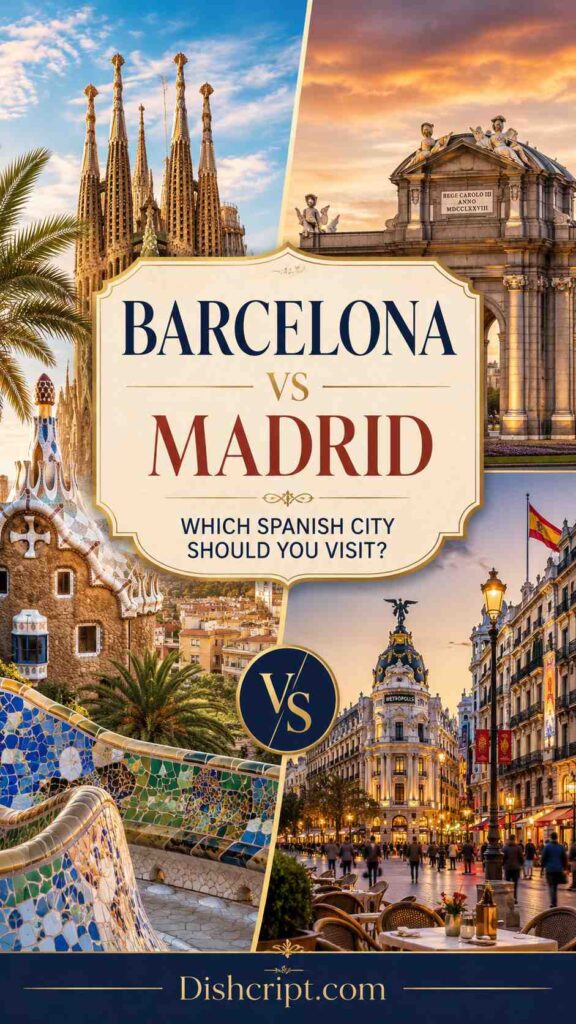
Barcelona and Madrid are the 2 most visited cities in Spain and 2 of the most visited cities in Europe. They sit 380 miles apart, connected by a high-speed AVE train that covers the distance in 2.5 hours. They share a country, a language (with Catalan spoken alongside Spanish in Barcelona), and a football rivalry — El Clásico — that divides the entire nation.
Barcelona vs Madrid comes down to what you want from Spain. Barcelona is the better choice for architecture (Antoni Gaudí’s Sagrada Familia, Park Güell, Casa Batlló), beaches (Barceloneta and the Mediterranean coast), old-world charm (the Gothic Quarter), and memorable day trips (Girona, Montserrat, Sitges).
Madrid is the better choice for world-class museums (Prado, Reina Sofía, Thyssen-Bornemisza), authentic Spanish culture (tapas bars, flamenco, nightlife), connections to southern Spain (Seville and Granada are 2.5 to 3 hours by AVE train), and a lived-in city feel that prioritizes locals over tourists. Both cities deserve a visit. If you can only pick one, this guide helps you decide.

Madrid vs Barcelona: Side-by-Side Comparison
| Category | Barcelona | Madrid |
| Best for | Architecture, beaches, old-world charm | Museums, nightlife, authentic culture |
| Population | ~1.6 million (city) / ~5.6 million (metro) | ~3.3 million (city) / ~6.8 million (metro) |
| Region | Catalonia (northeastern coast) | Community of Madrid (central Spain) |
| Language | Catalan and Spanish | Spanish |
| Beach access | Yes — Barceloneta and Mediterranean coast | No — inland city |
| Top landmarks | Sagrada Familia, Park Güell, Casa Batlló, Gothic Quarter, La Rambla | Royal Palace, Prado Museum, Retiro Park, Plaza Mayor, Puerta del Sol |
| Museums | Picasso Museum, MACBA, Fundació Joan Miró | Prado, Reina Sofía, Thyssen-Bornemisza (the “Art Triangle”) |
| Food scene | Seafood-forward, Catalan cuisine, La Boqueria market | Tapas bars, Mercado de San Miguel, cocido madrileño, late-night dining |
| Nightlife | Strong — bars close 3 a.m.+ | Legendary — Madrid doesn’t sleep before 4 a.m. |
| Football | FC Barcelona — Camp Nou (world’s largest football stadium) | Real Madrid — Santiago Bernabéu (newly renovated, 80,000+ seats) |
| Climate | Mediterranean — mild winters, warm summers, humidity | Continental — cold winters, hot summers, dry |
| Airport | Barcelona–El Prat (BCN) | Madrid–Barajas (MAD) — more US direct flights |
| Tourist feel | Very touristy — cruise port, high season crowds | Less touristy — feels like a working capital city |
| Days needed | 3–4 days minimum | 2–3 days |
| Avg. daily budget | €120–€180 | €100–€160 |
| Connection to south Spain | Flights or 6+ hour train | AVE train: Seville 2.5 hrs, Granada 3 hrs |
Who Should Choose Barcelona?
Choose Barcelona if you want Gaudí architecture, Mediterranean beaches, a walkable Gothic Quarter with narrow medieval streets, and day trips to Girona, Montserrat, and the Costa Brava.
Architecture: Gaudí Is the Reason Most People Visit Barcelona
Antoni Gaudí’s work defines Barcelona. The Sagrada Familia — a basilica that has been under construction since 1882 — is the city’s most famous landmark and one of the most visited monuments in Europe. The central Tower of Jesus Christ was completed on June 10, 2026, making it the tallest religious building in Europe. Tickets cost €26 to €40 and sell out days in advance.
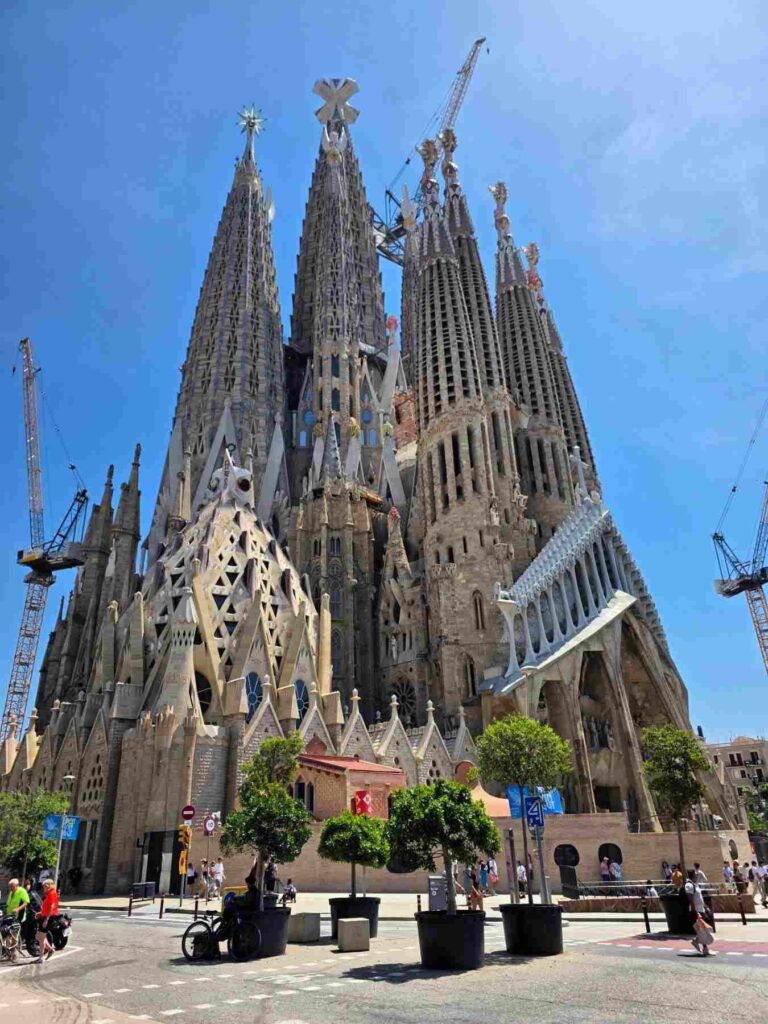
Park Güell is Gaudí’s mosaic-covered hilltop park with a wavy bench overlooking the Barcelona skyline. Casa Batlló and Casa Milà (La Pedrera) are Gaudí-designed residential buildings on Passeig de Gràcia — their facades look like they’re melting. No other city in the world has this concentration of a single architect’s work, and that’s what makes the Barcelona vs Madrid architectural comparison unbalanced in Barcelona’s favor.
Beaches: Barcelona Has the Mediterranean
Barcelona sits on the Mediterranean Sea. Barceloneta Beach is a 10-minute walk from the Gothic Quarter — a wide, sandy, urban beach with restaurants, volleyball, and people-watching. Madrid is an inland city with no coast. In the Barcelona vs Madrid debate, this is the clearest differentiator.
The Gothic Quarter: Medieval Atmosphere
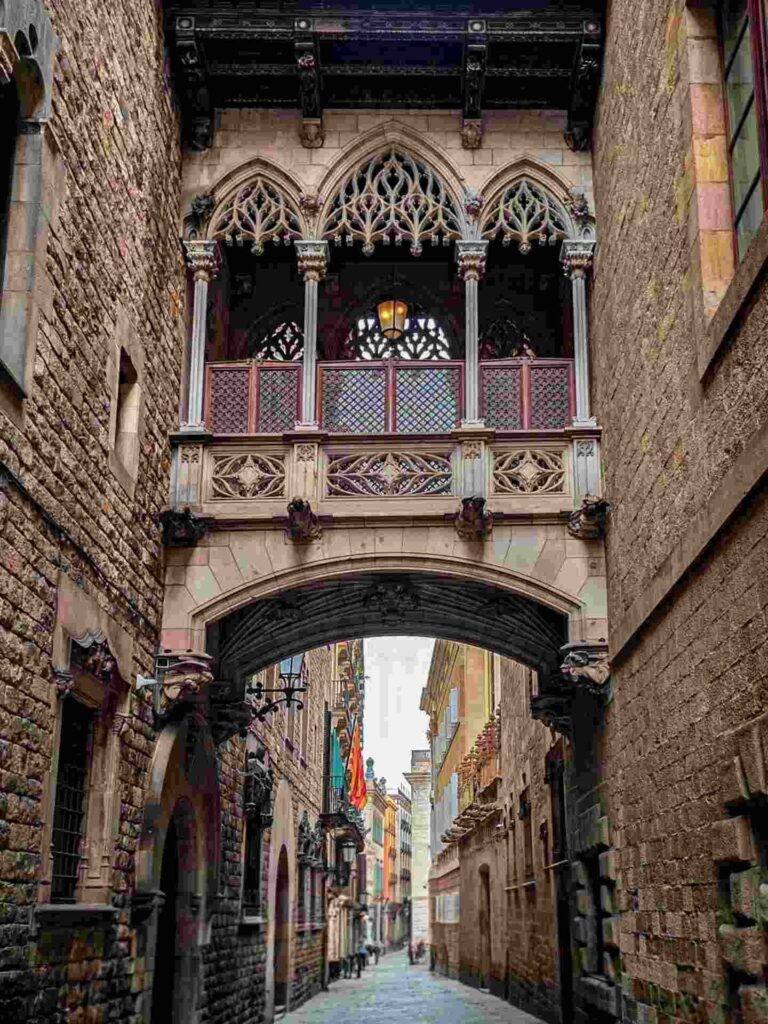
The Barri Gòtic (Gothic Quarter) is a maze of narrow medieval streets, small plazas, and centuries-old buildings between La Rambla and Via Laietana. The Barcelona Cathedral, the Pont del Bisbe (Bishop’s Bridge), and the Plaça del Rei are the landmarks. The quarter also has boutiques, tapas bars, and restaurants that stay open past midnight.
Day Trips from Barcelona
Girona (1 hour by train) is a medieval town with colorful riverside houses and Game of Thrones filming locations. Montserrat (1 hour) is a jagged mountain monastery with hiking and a boys’ choir. Sitges (40 minutes) is a coastal town with beaches and a lively LGBTQ+ scene. The Costa Brava (1 to 2 hours) offers dramatic coastal hiking. The Dalí Museum in Figueres (1.5 hours) houses the largest collection of Salvador Dalí works in the world.
Who Should Choose Madrid?
Choose Madrid if you want Spain’s best museums, the most authentic tapas culture, legendary nightlife, easy access to southern Spain (Seville, Granada, Toledo), and a city that feels like it belongs to locals rather than tourists.
Museums: The Art Triangle Is Unmatched
Madrid’s Museo del Prado holds one of the greatest collections of European art in the world — Velázquez’s Las Meninas, Goya’s Black Paintings, Bosch’s The Garden of Earthly Delights. The Museo Nacional Centro de Arte Reina Sofía holds Picasso’s Guernica — the most important anti-war painting in history. The Museo Thyssen-Bornemisza completes the “Art Triangle” with 1,000+ works spanning 8 centuries. No other city in the world concentrates this caliber of art within a 15-minute walk.
In the Barcelona vs Madrid museum comparison, Madrid wins decisively. Barcelona has the Picasso Museum, MACBA, and the Fundació Joan Miró — all excellent, but not at the Prado-Reina Sofía-Thyssen level.
Food and Tapas Culture
Madrid is the tapas capital of Spain. The tradition of free tapas with every drink survives in neighborhoods like La Latina, Lavapiés, and Malasaña. Mercado de San Miguel near Plaza Mayor is the most famous food market. The cocido madrileño (a slow-cooked chickpea stew) is the city’s signature dish. Dinner starts at 10 p.m. and restaurants stay full past midnight on weekdays.
Barcelona has excellent food — Catalan cuisine is seafood-forward with dishes like fideuà (a paella-like noodle dish) and pa amb tomàquet (bread with tomato). La Boqueria on La Rambla is the most famous market. But the Barcelona food scene has been diluted by tourist-trap restaurants on Las Ramblas and in the Gothic Quarter. In Madrid, the neighborhood tapas bars in La Latina feel more authentic and less performative.
Nightlife: Madrid Doesn’t Sleep
Madrid has the most famous nightlife in Europe. Dinner at 10 p.m. Bars at midnight. Clubs at 2 a.m. Home at 6 a.m. The Malasaña neighborhood is the hipster bar district. Chueca is the LGBTQ+ center. La Latina hosts the Sunday El Rastro flea market followed by afternoon cañas (small beers) at packed outdoor bars. The energy is relentless.
Barcelona has strong nightlife — especially in the Eixample and El Born neighborhoods — but it doesn’t match Madrid’s depth or duration. Madrid earned the nickname “the city that never sleeps” before New York borrowed it.
Day Trips from Madrid
Toledo (30 minutes by AVE) is a UNESCO World Heritage city called the “City of Three Cultures” for its Christian, Jewish, and Islamic heritage. Segovia (30 minutes by AVE) has a 2,000-year-old Roman aqueduct and the Alcázar castle that inspired Disney’s Cinderella Castle. Seville (2.5 hours by AVE) is the gateway to southern Spain’s flamenco, tapas, and Moorish architecture. Granada (3 hours by AVE) holds the Alhambra — the most visited monument in Spain.
Madrid’s connection to southern Spain is the strongest practical argument in the Barcelona vs Madrid debate. From Barcelona, reaching Seville requires a flight or a 6+ hour train ride. From Madrid, you’re there in 2.5 hours on the AVE high-speed train.
El Clásico: Madrid vs Barcelona in Football
El Clásico — the football match between FC Barcelona and Real Madrid CF — is the biggest club rivalry in world football, watched by an estimated 600+ million viewers per match.
The rivalry between Barcelona and Madrid extends beyond travel into sport. FC Barcelona and Real Madrid are the 2 most successful football clubs in Spanish history. El Clásico is played at least twice per season in La Liga, with additional meetings possible in the Copa del Rey, Supercopa de España, and UEFA Champions League.
| Club | Stadium | Capacity | La Liga Titles | Champions League Titles |
| FC Barcelona | Camp Nou (Spotify Camp Nou) | ~99,354 | 27 | 5 |
| Real Madrid CF | Santiago Bernabéu | ~80,000+ | 36 | 15 |
Camp Nou in Barcelona is the largest football stadium in the world by capacity and has been undergoing a massive renovation (the Espai Barça project). The Santiago Bernabéu in Madrid completed a $1 billion+ renovation with a retractable roof, 360-degree LED screen, and a retractable pitch.
If you’re a football fan, attending an El Clásico match (or any La Liga match) in either city is one of the most electric live sports experiences in the world. Match tickets range from €50 for standard La Liga matches to €500+ for El Clásico.
Barcelona vs Madrid Travel Cost Comparison
Madrid is slightly cheaper than Barcelona for tourists — lower hotel prices, cheaper dining, and more free museum hours.
| Expense | Barcelona | Madrid |
| Mid-range hotel (per night) | €120–€200 | €100–€170 |
| Budget hotel/hostel | €40–€80 | €35–€70 |
| Dinner for 2 (mid-range) | €50–€80 | €40–€70 |
| Tapas + drinks (per person) | €15–€25 | €12–€20 (some bars serve free tapas with drinks) |
| Museum entry | €10–€26 | €10–€15 (many free on certain hours) |
| Metro single ride | €2.40 | €1.50–€2.00 |
| Average daily budget | €120–€180 | €100–€160 |
Madrid’s free museum hours are a significant advantage: the Prado is free 6–8 p.m. Monday through Saturday and 5–7 p.m. Sunday, the Reina Sofía is free Monday and Wednesday through Saturday 7–9 p.m. and all day Sunday, and the Thyssen-Bornemisza is free on Mondays noon–4 p.m.
Barcelona vs Madrid: Weather Comparison
| Month | Barcelona Avg. High | Madrid Avg. High | Better City |
| January | 56°F / 13°C | 50°F / 10°C | Barcelona (milder) |
| March | 61°F / 16°C | 59°F / 15°C | Tie |
| May | 72°F / 22°C | 73°F / 23°C | Tie |
| July | 84°F / 29°C | 93°F / 34°C | Barcelona (cooler, beach access) |
| September | 79°F / 26°C | 82°F / 28°C | Tie |
| November | 61°F / 16°C | 54°F / 12°C | Barcelona (milder) |
Barcelona has a Mediterranean climate — mild winters, warm summers, and coastal humidity. Madrid has a continental climate — colder winters, hotter summers (regularly exceeding 95°F / 35°C in July and August), and dry air. Barcelona is the better summer destination because of the beach access and lower maximum temperatures.
Can You Visit Both Barcelona and Madrid?
Yes — and you probably should if you have 5+ days in Spain. The AVE high-speed train connects Madrid Atocha station and Barcelona Sants station in 2.5 hours, with trains departing every 30 to 60 minutes. One-way tickets cost €20 to €90 depending on booking timing (book 30 to 60 days ahead for the lowest fares on Renfe.com).
A suggested split: 3 nights in Barcelona and 2 nights in Madrid. This gives Barcelona the extra day it needs for Gaudí sights and a day trip, while Madrid’s compact tourist zone is manageable in 2 full days. Start in Barcelona if you’re arriving from the east (Mediterranean flights, cruise ships). Start in Madrid if you’re flying from the Americas (more direct US flights land at Madrid–Barajas).
Barcelona vs Madrid: Frequently Asked Questions
Is Barcelona or Madrid better to visit?
Barcelona is better for first-time visitors who want beaches, Gaudí architecture, and old-world charm. Madrid is better for travelers who want museums, authentic tapas culture, legendary nightlife, and easy access to southern Spain. Both cities are worth visiting. If you have 5+ days, visit both.
Is Barcelona or Madrid cheaper?
Madrid is slightly cheaper. Hotel prices, dining, and metro fares are all lower in Madrid than in Barcelona. Madrid also offers more free museum hours (Prado, Reina Sofía, and Thyssen all have free evening or weekly admission windows).
How far is Barcelona from Madrid?
380 miles (610 km) by road. The AVE high-speed train covers the distance in 2.5 hours. Flights take about 1 hour and 15 minutes. Driving takes about 6 hours via the A-2 highway.
Is Barcelona or Madrid safer?
Both cities are safe for tourists by European standards. Pickpocketing is the primary concern in both — Barcelona’s La Rambla, the Metro, and the Gothic Quarter are hotspots. Madrid’s Puerta del Sol, Gran Vía, and the Metro have similar risks. Standard urban precautions apply.
Which city has better food — Barcelona or Madrid?
Madrid has better traditional tapas culture and more authentic neighborhood dining. Barcelona has better seafood and Catalan-specific cuisine. Madrid’s La Latina neighborhood has the best tapas bar crawl in Spain. Barcelona’s La Boqueria market has the best fresh produce and seafood displays.
What is El Clásico?
El Clásico is the football match between FC Barcelona and Real Madrid CF — the biggest club rivalry in world football. The match is played at least twice per season in La Liga. Real Madrid plays at the Santiago Bernabéu in Madrid. FC Barcelona plays at Camp Nou (Spotify Camp Nou) in Barcelona.
Should I visit Barcelona or Madrid first?
Visit Barcelona first if arriving from the east (Mediterranean cruise, European flight). Visit Madrid first if flying from the Americas (more US direct flights to Madrid–Barajas). From Madrid, the AVE train connects to Barcelona in 2.5 hours, making a combined trip easy.
Final Thoughts
Barcelona vs Madrid is not a competition with a clear winner — it’s a question of what kind of Spain you want.
Barcelona gives you the Mediterranean, Gaudí’s architecture, a Gothic Quarter that feels medieval, and the kind of visual beauty that fills a camera roll in 1 afternoon. Madrid gives you the Prado, tapas bars where locals outnumber tourists 10 to 1, nightlife that starts at midnight and runs until dawn, and a train station that puts you in Seville before lunch.
The best trip to Spain includes both. Take the AVE train between them — 2.5 hours, no airport, no check-in, no security line — and see the country from 2 angles. Barcelona faces the sea. Madrid faces the interior. Together, they show you what Spain actually is: a country that doesn’t ask you to choose between beauty and substance, because it has both.
Start where your flight lands. End where the tapas are best. And if someone asks you the Barcelona vs Madrid question after you’ve been to both, tell them the honest answer: go to both.