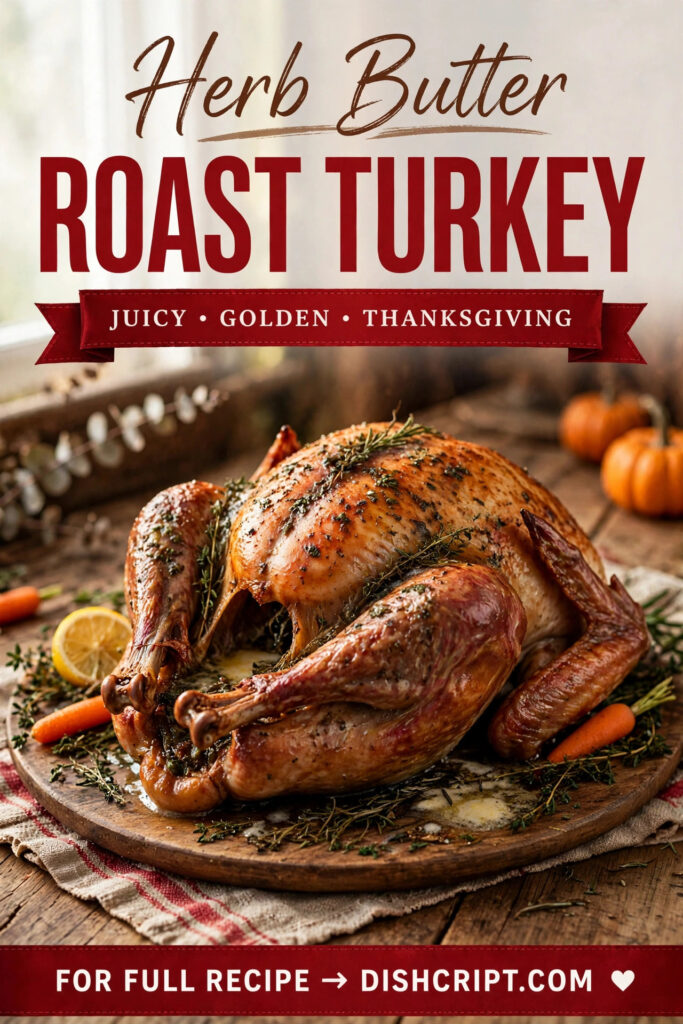
Herb Butter Roast Turkey — Juicy, Golden, and Foolproof

Herb Butter Roast Turkey — Juicy, Golden, and Foolproof
The first Thanksgiving turkey I ever cooked was a disaster. I was twenty-three, in a tiny apartment with an oven that ran hot, and I had invited both sets of parents. The morning of Thanksgiving, I opened the fridge and found my turkey still frozen solid in the middle. I ran cold water over it for hours, shoved it in the oven late, cranked the heat to catch up, and served a bird that was burnt outside and pink near the bone. My father-in-law smiled politely and ate three rolls.
I have cooked a turkey every Thanksgiving since then, and I have made every mistake possible. I have forgotten the giblet bag inside the cavity, trusted those little pop-up timers (never again), and basted so often that dinner ran two hours late. Each year the turkey got a little better.
The biggest change came from my neighbor, Mrs. Callahan. She had cooked Thanksgiving dinner for forty years. One year she brought over a bowl of green, garlicky butter and said, “Honey, the secret is not on the turkey. It is under the skin.” She showed me how to slide herbed butter under the breast skin so it melts into the meat as it roasts. That one trick changed everything.
Now this herb butter roast turkey is my tradition. By noon the whole house smells of rosemary and garlic, and my kids drift downstairs just to stand near the oven. There is always a quiet fight over the crispy skin. If you are scared of cooking a whole turkey, I understand. This is the recipe I give every friend who says, “I could never do it.” You can. Let me show you how.
Why This Recipe Works
- Butter under the skin bastes the meat from the inside. As it melts, it soaks right into the breast — the part that dries out first.
- A simple dry brine the night before. Just salt, rubbed on the bird, resting in the fridge overnight. Five minutes of work, much juicier meat.
- Low, gentle heat. We roast at 325°F so the bird cooks evenly instead of burning outside while staying raw inside.
- Fresh herbs and lemon keep it bright. Rosemary, thyme, sage, garlic, and lemon zest wake up the flavor without anything fancy.
- The drippings become amazing gravy. Butter and juices collect in the pan and turn into rich gravy with barely any extra work.
- A thermometer removes all guessing. Breast at 165°F means done. No cutting, no peeking, no hoping.
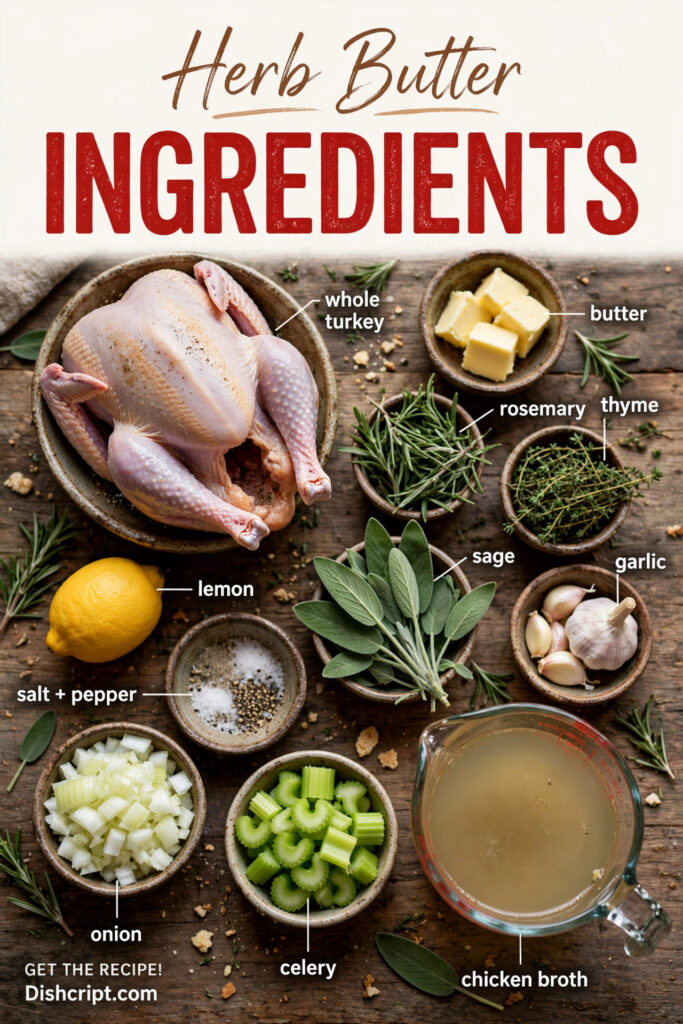
Ingredients
For the turkey:
– 1 whole turkey, 12 to 14 pounds, fully thawed
– 2 tablespoons kosher salt (for the dry brine — optional but recommended)
For the herb butter:
– 1 cup (2 sticks) unsalted butter, softened
– 3 tablespoons fresh rosemary, finely chopped
– 3 tablespoons fresh thyme leaves
– 2 tablespoons fresh sage, finely chopped
– 6 cloves garlic, minced
– Zest of 1 lemon
– 1 tablespoon kosher salt
– 1 teaspoon black pepper
For the roasting pan:
– 1 large onion, quartered
– 1 lemon, halved
– 3 celery stalks, cut into chunks
– 2 cups low-sodium chicken broth
For the gravy:
– 4 tablespoons all-purpose flour
– 2 cups low-sodium chicken or turkey broth
– Salt and pepper to taste
Equipment You’ll Need
- Large roasting pan with a rack
- Instant-read meat thermometer (the most important tool here)
- Kitchen twine
- Aluminum foil
- Big cutting board and a sharp carving knife
- Fat separator or large measuring cup (for gravy)
How to Make It
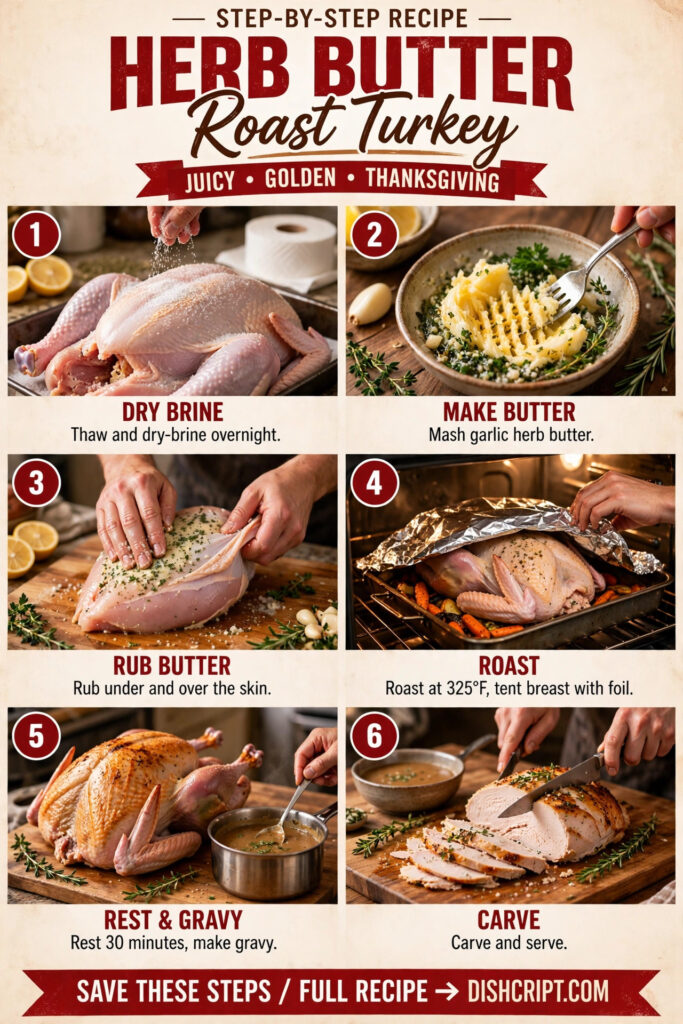
Step 1: Thaw the turkey completely. A frozen turkey needs about 24 hours in the fridge for every 4 to 5 pounds, so a 14-pound bird needs three full days. Set it on a tray on the bottom shelf. In a rush, thaw it in cold water, changing the water every 30 minutes — about 30 minutes per pound. Never thaw on the counter. I learned this the scary way in my twenties.
Step 2: Dry brine the night before. Take the turkey out of its wrapping. Pull the neck and the giblet bag out of the cavity — check both ends, one likes to hide. Pat the bird very dry with paper towels, inside and out. Rub 2 tablespoons of kosher salt all over it. Set it on a rack over a tray, uncovered, in the fridge overnight. In the morning the skin will look dry and tight — exactly what you want for golden, crisp skin.
Step 3: Warm up the turkey and make the herb butter. One hour before roasting, take the turkey out of the fridge. If you brined it, do not rinse — just pat dry. Mash the softened butter with the rosemary, thyme, sage, garlic, lemon zest, salt, and pepper until it is one even, green-flecked mix. The butter must be truly soft or the herbs will not blend in. It should dent easily under your finger.
Step 4: Slide the butter under the skin. This is the heart of the recipe. At the neck end, gently work your fingers between the skin and the breast meat, loosening the skin over the whole breast. Go slowly so it does not tear. Push about two-thirds of the herb butter under the skin and spread it evenly with your fingers from the outside. Rub the rest all over the outside — breast, legs, wings. Butter underneath keeps the meat juicy; butter on top helps the skin brown.
Step 5: Fill the cavity and tie the legs. Stuff the cavity loosely with the onion, lemon halves, and celery — they steam inside and flavor the meat and drippings. Do not pack it tight. Tuck the wing tips under the body so they do not burn, and tie the legs together with twine. Pour the 2 cups of broth into the pan so the drippings do not burn.
Step 6: Roast at 325°F. Set the oven rack in the lower third and heat to 325°F. Roast the turkey breast-side up for about 13 minutes per pound — roughly 2 hours 45 minutes to 3 hours for a 12 to 14 pound bird. After 90 minutes, tent the breast loosely with foil so it does not get too dark while the legs finish. Baste two or three times with the pan juices, quickly, so the oven does not lose heat.
Step 7: Check the temperature. Start checking 30 minutes before you expect it to be done. The breast should read 165°F in the thickest part, away from bone. The thigh should read 175°F. Ignore any plastic pop-up timer — mine once popped an hour early. The thermometer is the only truth that matters.
Step 8: Rest for 30 minutes, then make gravy. Move the turkey to a cutting board, tent with foil, and rest 30 minutes so the juices settle. Meanwhile, strain the pan drippings, spoon off most of the fat, and warm 4 tablespoons of the drippings in a saucepan. Whisk in the flour, cook one minute, then slowly whisk in the broth. Simmer 3 to 5 minutes until it coats a spoon. Season with salt and pepper.
Step 9: Carve and serve. Remove the twine. Cut the legs off at the joint and separate drumsticks from thighs. Slice the breast against the grain — never with it, or the meat turns chewy. Arrange on a warm platter, spoon a little pan juice over the top, and bring the gravy to the table. Accept the compliments.
My Best Tips
Trust the thermometer, not the clock. Ovens lie and time charts are guesses. A $15 instant-read thermometer ends every turkey worry: breast 165°F, thigh 175°F, done.
Pat the skin very dry. Wet skin steams; dry skin crisps. Press paper towels all over until no moisture comes off. This tiny step is the difference between golden crispy skin and pale rubbery skin.
Do not skip the rest. I once carved too early and watched all the juices run out onto the board. Thirty minutes, tented with foil, while you make the gravy.
My big mistake: I used to baste every 20 minutes. I thought more basting meant more moisture. Really it meant the oven kept losing heat and dinner was late two years running. Now I baste three times, quickly. The butter under the skin does the real work.
Tent the breast before it gets too dark. Check at the 90-minute mark. If the breast is already deep golden, lay foil loosely over it. You can remove it near the end for a final crisp. You cannot un-burn skin.
Save the carcass for stock. After dinner, simmer the bones with the cavity vegetables in water for a few hours — free, amazing next-day soup.
Variations
Citrus orange twist. Swap lemon for orange — orange zest in the butter, orange halves in the cavity. Warm, sweet-smelling, and the drippings make lovely gravy. My sister does it this way every year.
Smoky paprika butter. Add 2 teaspoons smoked paprika and half a teaspoon of cayenne to the herb butter. The skin turns reddish-gold with a gentle warmth. Cozy, not hot.
Maple herb glaze. In the last 30 minutes, brush the breast with 3 tablespoons maple syrup mixed with 1 tablespoon melted butter. Sweet, shiny, caramelized skin. Watch it closely — maple burns fast.
Bacon blanket. Lay 8 to 10 bacon strips over the breast for the first 90 minutes, then remove them so the skin crisps. The bacon fat bastes the meat, and you get crispy bacon as the cook’s treat.
Make Ahead
The herb butter can be made up to one week ahead — roll it in plastic wrap and refrigerate, or freeze up to three months. The dry brine happens the night before by design. Chop the onion, lemon, and celery a day ahead and bag them in the fridge. On Thanksgiving, you just rub, stuff, and roast. I also set the table and make cranberry sauce the day before.
Storing and Reheating
Carve leftover meat off the bone within two hours and refrigerate in airtight containers for up to 4 days. To reheat, put slices in a baking dish, splash with broth or gravy, cover tightly with foil, and warm at 325°F for about 20 minutes. Leftover turkey freezes well for up to 3 months — I freeze it in meal-sized bags with a little broth.
What to Serve With It
- Creamy mashed potatoes — non-negotiable. They were made for turkey gravy.
- Classic bread stuffing — baked in a dish for crispy edges, not stuffed in the bird.
- Green bean casserole — the old-fashioned one with crispy onions.
- Homemade cranberry sauce — ten minutes on the stove; the tartness cuts the richness perfectly.
- Roasted carrots and parsnips — with olive oil, salt, and a little honey.
- Soft dinner rolls — for mopping gravy and for next-day turkey sandwiches.
FAQs
How long does it take to thaw a turkey?
About 24 hours in the fridge per 4 to 5 pounds — three full days for a 14-pound bird. In a hurry, use cold water in the sink, changed every 30 minutes (30 minutes per pound).
Do I really need to baste?
Barely. The butter under the skin bastes the meat from the inside as it melts. I baste two or three times just for even browning. Opening the oven too often drops the heat and slows cooking.
What if the skin browns too fast?
Tent it loosely with foil. Totally normal — the breast browns faster than the legs cook. Remove the foil for the last 15 minutes if you want extra crisp.
Can I use dried herbs instead of fresh?
Yes. Use one-third the amount: 1 tablespoon each of dried rosemary and thyme, 2 teaspoons dried sage. Fresh tastes brighter, but dried still makes a very good turkey.
How do I know it is done without a thermometer?
Please just get a thermometer. The old tricks — clear juices, wiggly leg — are unreliable, and I ruined two turkeys before I bought one. It costs less than the bird.
Can I cook a bigger turkey this way?
Yes. Add half a stick of butter and a little more of each herb per 4 extra pounds. Keep 325°F and about 13 minutes per pound. Tent the breast when golden and start checking temp early.
This herb butter roast turkey turned me from a nervous first-timer into the person everyone asks to host Thanksgiving. Good butter, fresh herbs, gentle heat, and a little patience. Make it once, and it will become your tradition too.