Cheesecake Factory Allergen Menu with prices

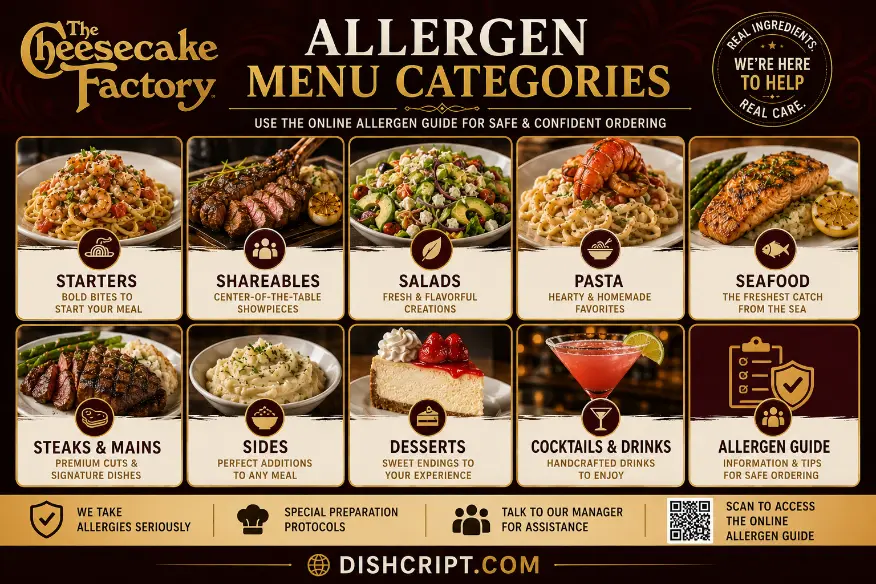
With a menu that runs past 250 items, The Cheesecake Factory can feel overwhelming if you’re managing a food allergy — but the chain offers a tool to help: its Online Allergen Guide. It lets you filter that enormous menu by allergen, so you can see which dishes don’t contain a given allergen before you ever sit down. This guide explains how The Cheesecake Factory’s allergen information works, what it covers, how to access it, and how to order more carefully — for milk, egg, wheat/gluten, soy, peanuts, tree nuts, fish, shellfish, and more.
Before anything else, the most important point: The Cheesecake Factory Allergen Menu states plainly that its restaurants are not allergen-free or gluten-free environments, and it cannot guarantee that any menu item will be free of any allergen. This guide is general information to help you use the chain’s official tools and order more safely — it is not medical advice and not a guarantee of safety. Always confirm details using the official Online Allergen Guide, talk with the staff and a manager at your specific location, and, for serious allergies, consult your medical professional.
Read This First: The Cheesecake Factory’s Allergen Menu Disclaimers
These caveats come directly from The Cheesecake Factory, and they matter for everyone managing an allergy:
- No guarantees. The chain says that while it makes reasonable efforts in sourcing, preparation, and handling to avoid introducing the named allergens, it cannot guarantee any menu item will be free of any allergen.
- Not an allergen-free environment. Restaurants use shared kitchens, equipment, and fryers, so cross-contact is possible on every order — even for items that don’t list a given allergen.
- Recipes change. Menu items and ingredients can change (seasonally and otherwise), so allergen information can go out of date — check the current guide before each visit.
- Tell your server. Inform your server of a food allergy before ordering so the kitchen can follow its allergen-handling protocol; for serious allergies, ask to speak with a manager.
- Locations can vary. With 200+ restaurants, practices, sourcing, and even some bread products can differ by location — verify locally.
- Wheat-free is not the same as gluten-free. Filtering out “wheat” doesn’t catch gluten from barley, rye, and other grains — important if you have celiac disease.
Keep these in mind as you read everything below.
What Is the Cheesecake Factory Online Allergen Guide?
The Cheesecake Factory’s Online Allergen Guide is a digital tool that lets you filter the full menu by allergen. You select an allergen to exclude — for example, “exclude wheat” or “exclude nuts” — and the guide shows you which menu items do not contain that allergen. Because the menu is so large, this is far more practical than scanning a printed list.
A few things to know about how it works:
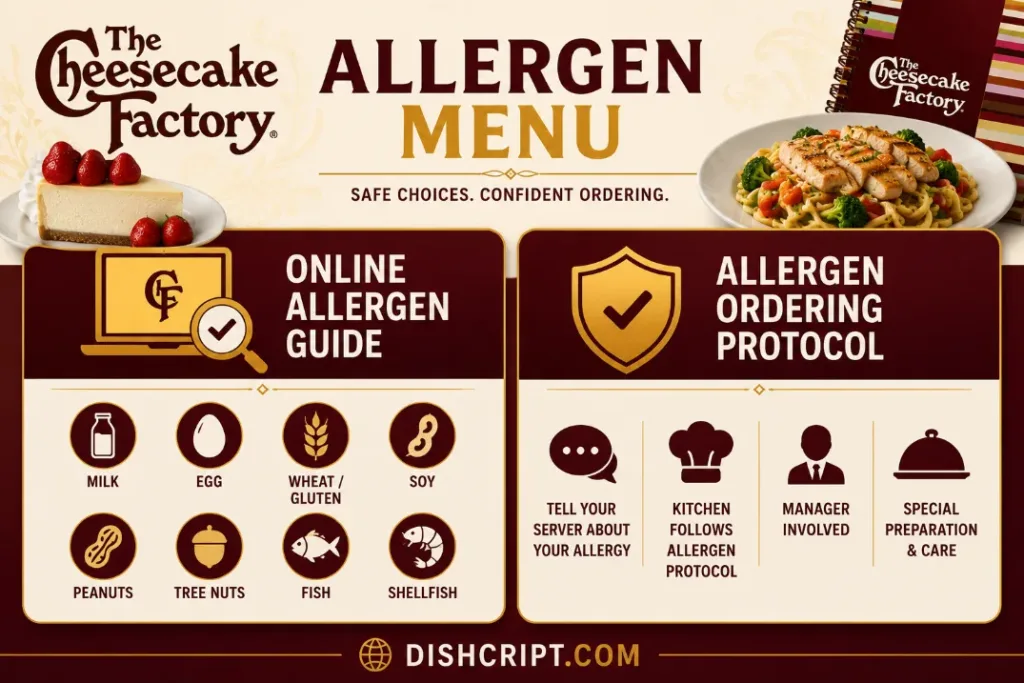
- It covers the major allergens, including milk, egg, wheat, soy, peanuts, tree nuts, fish, and shellfish (and helps you screen for gluten via wheat — with the caveat above).
- Some “safe” items still need a special order. Many dishes can be made without an allergen only if you request a modification (for example, ordering a burger with a gluten-free bun, or a salad without croutons). The guide can indicate when an item must be customized.
- It reflects current recipes. Because the chain updates items over time (including new 2026 menu additions), the online tool is the most current reference — but still confirm at the restaurant.
Think of the guide as a planning tool you use before you go, then confirm in person — not a substitute for talking to the staff.
How to Access the Allergen Information
Always use The Cheesecake Factory’s official sources for the most current allergen data:
- The Online Allergen Guide: Visit the official allergen page at thecheesecakefactory.com/allergy (you may be asked for your location, since some details vary by restaurant).
- Nutritional/allergen documents: The chain also publishes nutritional information you can review alongside the allergen filter.
- In the restaurant: Tell your server about your allergy and ask to speak with a manager for detailed questions about preparation and current protocols.
Independent “Cheesecake Factory allergen menu” websites can be outdated or inaccurate, and availability of any in-restaurant printed allergy menu may vary. The official Online Allergen Guide and your restaurant’s manager are the authoritative sources. When information conflicts, trust the official guide and the staff.
The Allergen-Ordering Protocol
When you notify staff of an allergy, The Cheesecake Factory follows an allergen-handling protocol intended to reduce risk. Based on the chain’s practices and widely reported guest experiences, this typically includes:
- Notifying the kitchen/manager. Saying you have an allergy (not just a “preference”) triggers the formal process and gets a kitchen or floor manager involved.
- Cleaner preparation. Steps like changing gloves, using clean/sanitized utensils and surfaces, and added care during plating.
- Manager involvement. At many locations, a manager helps confirm the order and may deliver the plate to avoid mix-ups.
These steps reduce risk but do not eliminate it, because the kitchen is still a shared environment. Protocols and staff knowledge can vary by location and shift, so confirm the specifics each visit.
Gluten & Celiac Notes
The Cheesecake Factory offers a number of items made without gluten, but its restaurants are not gluten-free, and cross-contact is a real risk. General points (verify the current details):
- There’s a gluten-free/reduced-gluten selection, plus many naturally gluten-free dishes (such as simple grilled proteins, certain steaks and fresh fish, and some salads — often requiring modifications).
- Gluten-free buns and pasta are available on request. You generally must specify the gluten-free version — several dishes have both a regular and a gluten-free preparation. (Many locations use a recognizable brand of gluten-free bun, which makes it easier to visually confirm.)
- Only a few cheesecakes are gluten-free. Reports consistently point to a small number of gluten-free cheesecake options (such as the Godiva® chocolate and the Low-Licious varieties); most cheesecakes contain gluten.
- Fried items are high-risk. Fryers are often shared, and whether a “dedicated” fryer is truly dedicated can vary by location and time of day — treat fries and fried foods as a cross-contact risk even if the item itself is gluten-free.
- Remember wheat ≠ gluten. The guide’s wheat filter won’t catch barley/rye-based gluten, so celiac diners should be extra cautious and lean on staff confirmation.
If you have celiac disease or are highly sensitive, consider calling your local restaurant ahead, speaking with a manager on arrival, and weighing the shared-kitchen risk for yourself.
General Notes for Other Allergens
The notes below are general, not a safe-to-eat list. Always confirm specifics for your exact order using the official guide and with your location.
Milk / Dairy. A very common allergen across this menu. Note that the pizza dough contains milk, brunch/breakfast mains generally contain dairy, and many vegetables are prepared with butter — though some can be ordered without. The chain does list dairy-free salad dressings and some dairy-free bread/bun options, but desserts are largely dairy-based. Confirm bread, butter, and preparation each time.
Egg. Present in many items (and in some gluten-free or dairy-free swaps, like certain buns). Confirm via the guide and staff.
Soy. Common in oils, sauces, and fried items. Use the filter and verify.
Peanuts / Tree Nuts. Use the “exclude nuts” filter, and pay special attention to salads, sauces, desserts, and garnishes where nuts commonly appear.
Fish / Shellfish. With a large seafood selection and shared prep, cross-contact is a meaningful risk for shellfish and fish allergies — flag it clearly and confirm.
Sesame. Now a major U.S. allergen; check breads/buns and any sesame-containing items against the current guide.
Tips for Ordering More Safely
- Use the Online Allergen Guide before you go — plan your order, and re-check it on each visit since recipes change.
- Say “allergy,” not “preference.” This triggers the kitchen’s formal allergen protocol.
- Ask for a manager for anything serious or unclear, and confirm modifications (no croutons, gluten-free bun, no butter, etc.).
- Be cautious with fried foods and shared-fryer items if you’re sensitive to gluten or other allergens.
- Confirm bread and bun options at your specific location — they can differ, and toasted breads may involve butter.
- Double-check your plate before eating, and ask the runner to confirm any allergy modifications.
- Watch new and seasonal items, which can introduce allergens not in your usual order.
- For severe allergies or celiac disease, consult your medical professional about dining in shared-kitchen restaurants, and decide what risk level is acceptable for you.
Cheesecake Factory Allergen Menu with prices FAQ
Does The Cheesecake Factory have an allergen menu?
Yes — it offers an Online Allergen Guide that lets you filter its full menu by allergen (milk, egg, wheat, soy, peanuts, tree nuts, fish, shellfish, and more) to see which items don’t contain a given allergen. Access it at thecheesecakefactory.com/allergy.
Can The Cheesecake Factory guarantee a dish is allergen-free?
No. The chain states it cannot guarantee any item is free of any allergen and that its restaurants are not allergen-free or gluten-free environments, due to shared kitchens and equipment.
Is The Cheesecake Factory safe for celiac disease?
It offers gluten-free options, but it’s not a dedicated gluten-free kitchen, and cross-contact is possible. Many people with celiac do dine there using careful ordering, but the safest approach is to call ahead, speak with a manager, choose lower-risk dishes, and weigh the risk yourself.
How do I use the Online Allergen Guide?
Go to the official allergen page, select the allergen(s) you need to avoid, and the tool shows items that don’t contain them — sometimes noting when a dish must be modified to be made without that allergen.
Are The Cheesecake Factory fries gluten-free?
The fries may not contain gluten ingredients, but they’re often cooked in shared fryers, and dedicated-fryer practices vary by location and time of day — so treat them as a cross-contact risk.
Are there gluten-free cheesecakes?
Yes, but only a few — reports point to options like the Godiva® chocolate and Low-Licious cheesecakes. Most cheesecakes contain gluten, so confirm the specific flavor.
How do I tell the staff about my allergy?
Tell your server when ordering (use the word “allergy”), and ask for a manager for detailed questions — this triggers the restaurant’s allergen-handling protocol.
How current is the allergen information?
Recipes and items change, so always check the latest official Online Allergen Guide before ordering and re-confirm with staff on each visit.
Final Thoughts
The Cheesecake Factory’s Online Allergen Guide is a genuinely useful tool for navigating one of the largest menus in casual dining — but it works best when you use it the way the chain intends: as up-to-date guidance to check before every visit, paired with a clear conversation with your server and a manager. Keep the big realities in mind — shared kitchens and fryers, recipes that change, only a few gluten-free cheesecakes, and the fact that nothing is guaranteed allergen-free — and lean on customization and staff confirmation to lower your risk.